

One of the most frequently raised objections to the Seventh-day Adventist interpretation of the scapegoat concerns how the sin offering is interpreted in Leviticus 16.
Many Christians believe that both the Lord's goat and the goat for Azazel represented Jesus Christ because Scripture seems to associate both animals with a single sin offering.
The Argument: Two Goats for One Sin Offering
Leviticus 16:5 declares:
"And he shall take of the congregation of the children of Israel two kids of the goats for a sin offering, and one ram for a burnt offering." (KJV)
Notice the wording carefully. Aaron was instructed to take two goats for a sin offering.
Those who believe that both goats represent Christ frequently point to this passage as evidence that the two goats collectively constituted one sin offering. Essentially, their reasoning is that if both goats were taken for a sin offering, then both must have participated in the sin offering. Therefore, they argue, both goats must represent Christ and His work of atonement.
At first glance, that interpretation may seem persuasive. In fact, if we examine verse 5 in isolation, we can understand why someone would reach that conclusion. The text explicitly identifies two goats and associates them with a sin offering.
However, the question is not simply whether two goats were selected for the ceremony; the question is what happened to those goats after they were selected.
And this is where I believe mainstream Christianity's understanding falls short.
The Casting of Lots Established Two Different Roles
Leviticus 16:8 tells us:
"And Aaron shall cast lots upon the two goats; one lot for the LORD, and the other lot for the scapegoat." (KJV)
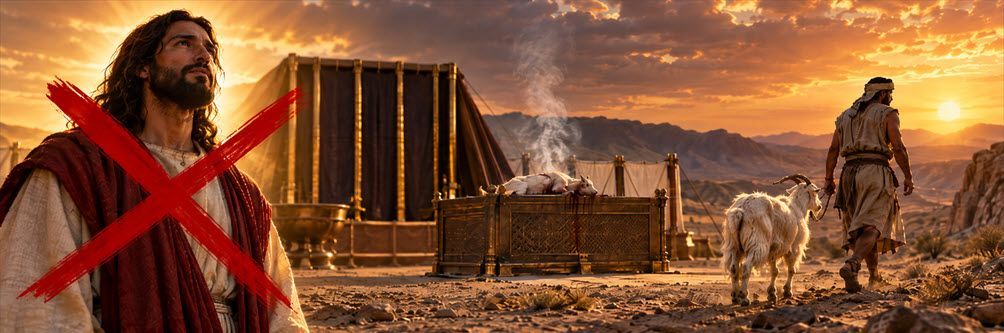

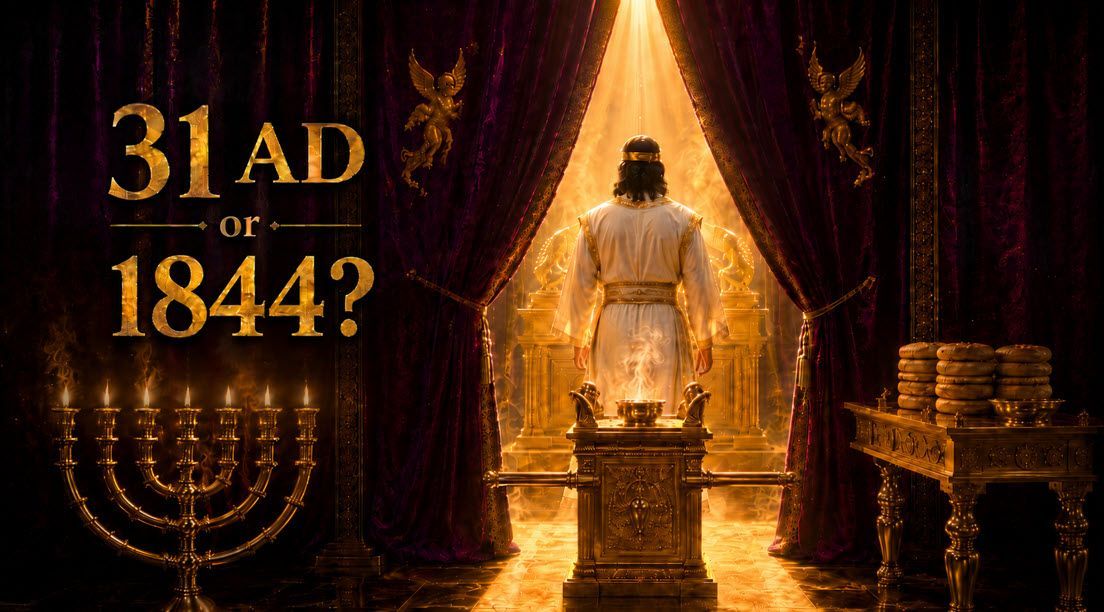


Notice what happened. Although Aaron initially selected two goats, their individual assignments had not yet been determined. It was the actual casting of lots that distinguished one from the other. One goat was designated for Yahweh, while the other was designated for Azazel.
Now, assigning two different roles does not automatically prove that both goats were unrelated to the same sin-offering ceremony; however, the casting of lots does establish that the two goats were not intended to perform the same functions.
Leviticus 16:9 — The Goat That Was Made a Sin Offering
Leviticus 16:9 declares:
"And Aaron shall bring the goat upon which the LORD'S lot fell, and offer him for a sin offering." (KJV)
The word translated "offer" in this passage comes from the Hebrew verb ʿāśâ (עָשָׂה). This word commonly means "to do" or "to make." Interestingly, it is the same verb used in Genesis 1:26 when God declared:
"Let us make [ʿāśâ] man in our image, after our likeness."
In Leviticus 16:9, the Hebrew expression is: וְעָשָׂהוּ חַטָּאת — wəʿāśāhû ḥaṭṭāʾt. The expression can be translated:
"And he shall make it a sin offering."
This is significant because the command is specifically directed toward the goat upon which the Lord's lot fell.
Consider the progression of the chapter:
- First, Leviticus 16:5 introduces two goats for the sin-offering ceremony.
- Second, Leviticus 16:8 describes the casting of lots to distinguish their respective assignments.
- Third, Leviticus 16:9 explicitly instructs Aaron to make the goat for Yahweh a sin offering.
But what does God command concerning the other goat? Leviticus 16:10 states:
"But the goat, on which the lot fell to be the scapegoat, shall be presented alive before the LORD, to make an atonement with him, and to let him go for a scapegoat into the wilderness." (KJV)
The contrast is undeniable. The goat for Yahweh was designated for the sacrificial sin-offering procedure.
The goat for Azazel was instructed to remain alive and eventually be sent into the wilderness. These were two different assignments.
Which Goat Is Called the Sin Offering?
From the moment the lots were cast and both goats' destinies were determined, the chapter never refers to the scapegoat as a sin offering. It is always designated as the scapegoat or the live goat.
We can easily prove this with verse 15:
"Then shall he kill the goat of the sin offering, that is for the people, and bring his blood within the vail, and do with that blood as he did with the blood of the bullock, and sprinkle it upon the mercy seat, and before the mercy seat." (KJV)
Ask yourself this simple question: Does anyone question which goat this text is referring to? Of course not! It is understood that when the chapter refers to the sin offering, it always refers to the first goat that was chosen to be sacrificed.
Were Animal Sin Offerings Normally Sacrificed?
In the Bible, whenever an animal was deemed a sin offering, it was always sacrificed. While we do have examples of non-living materials, such as flour (Leviticus 5:11–13), permitted to be sin offerings, this exception does not provide an example of an individual living animal being designated as a sacrificial sin offering and subsequently released alive.
Thus, throughout the ordinary ceremonies, the animal designated as a sin offering was always slaughtered.
Being picked out does not mean chosen
There is another biblical account that illustrates why being presented as a candidate does not necessarily mean being appointed to a particular position. The example is found in Acts chapter 1. After Judas betrayed Jesus and took his own life, the remaining disciples recognized that someone needed to replace him.
Acts 1:22 declares:
"Beginning from the baptism of John, unto that same day that he was taken up from us, must one be ordained to be a witness with us of his resurrection." (KJV)
Notice that only one individual was needed. There was one position to fill. However, notice what happened in verse 23:
"And they appointed two, Joseph called Barsabas, who was surnamed Justus, and Matthias." (KJV)
Two men, Joseph and Matthias, were put forward. Yet only one individual would ultimately receive the apostleship.
Notice what the apostles then prayed for:
"And they prayed, and said, Thou, Lord, which knowest the hearts of all men, shew whether of these two thou hast chosen." (Acts 1:24, KJV)
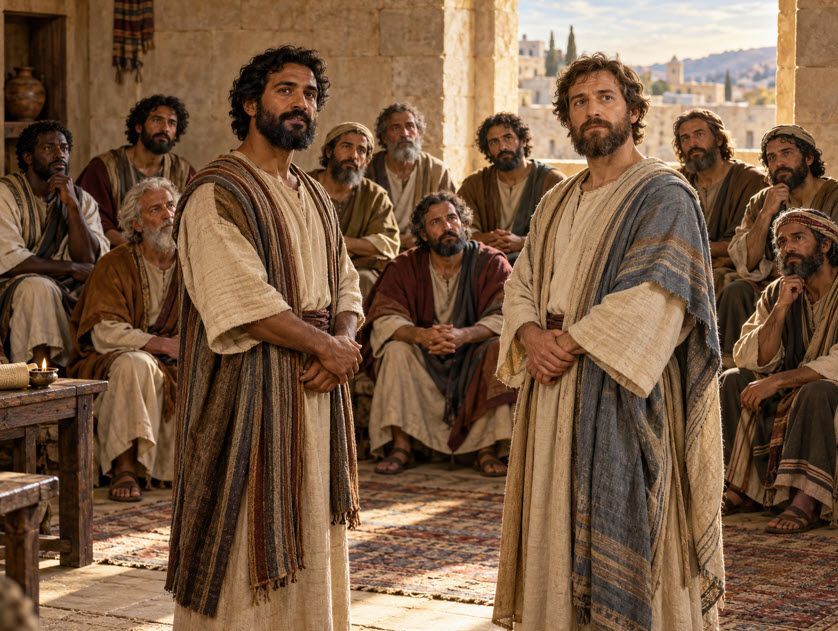
Notice the distinction. Two individuals had been presented, but the apostles asked God to reveal which of the two He had chosen. Now consider what happened in verse 26:
"And they gave forth their lots; and the lot fell upon Matthias; and he was numbered with the eleven apostles." (KJV)
Both men were presented as candidates. Both participated in the selection process. But only Matthias was numbered with the eleven apostles. Why? Because being picked out to perform a function does not always mean you are chosen to perform that function.
- In Acts 1, two men were put forward to fill a vacant apostleship.
- In Leviticus 16, two goats were selected for the Day of Atonement.
- In Acts 1, lots were cast to determine which man would become an apostle.
- In Leviticus 16, lots were cast to determine the respective assignments of the goats.
- In Acts 1, Matthias was chosen to fill the office, while Joseph was not.
- In Leviticus 16, the goat upon which Yahweh's lot fell was made the sacrificial sin offering, while the goat for Azazel was presented alive.
Being initially selected does not necessarily mean being designated to perform the same function.
Conclusion
Leviticus 16:5 presents two goats for a sin offering. However, Scripture also tells us what happened after those goats were selected.
- Lots were cast.
- Different assignments were established.
- The goat for Yahweh was made a sin offering and slaughtered.
- The goat for Azazel was presented alive and later sent into the wilderness bearing the confessed iniquities of Israel.
Thus, even though two goats were selected for the ceremony, only the goat for Yahweh was slaughtered as the sin offering. The difference between being selected and being designated is important. And understanding that difference helps us understand that the Lord's goat and the scapegoat did not combine for a sin offering.