
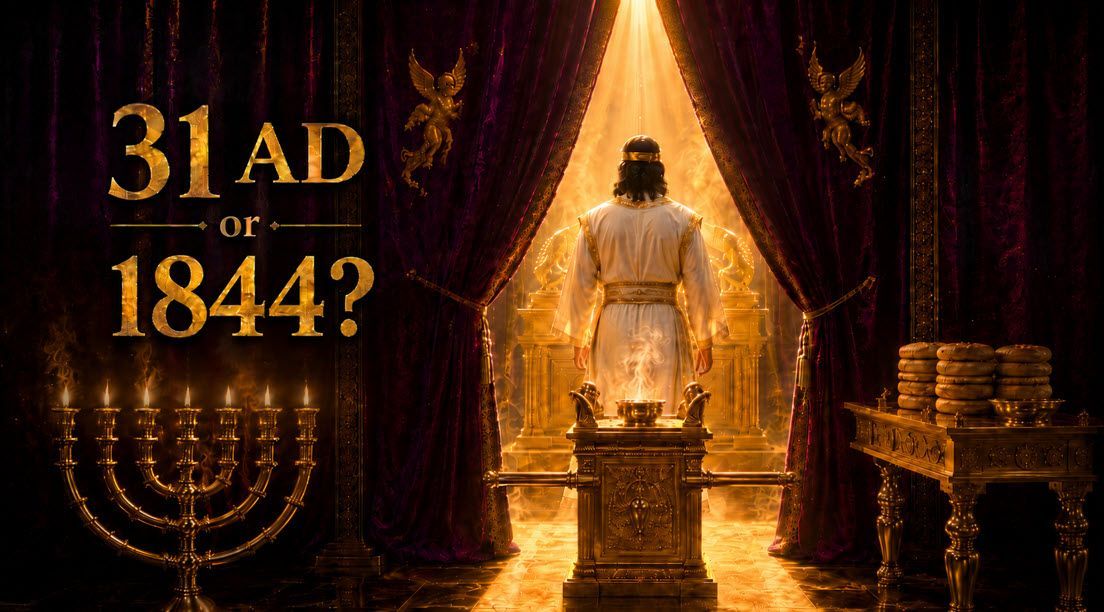
As Seventh-day Adventists, we have historically taught that when Jesus ascended to heaven, He began His priestly ministry in the first compartment of the heavenly sanctuary, also known as the Holy Place. Then, in 1844, He entered the second compartment, also known as the Most Holy Place, to begin the final phase of His ministry. However, Hebrews 6:19–20 presents an apparent challenge:
“Which hope we have as an anchor of the soul, both sure and stedfast, and which entereth into that within the veil; whither the forerunner is for us entered, even Jesus, made an high priest for ever after the order of Melchisedec.”
Critics of the Adventist sanctuary doctrine have argued that the phrase “within the veil” refers specifically to the Most Holy Place. Thus, if Jesus entered the Most Holy Place immediately after His ascension in AD 31, how could He have entered it again in 1844?
This question has troubled Adventists for generations. Yet the answer lies hidden in plain sight within the book of Hebrews. This often overlooked detail reveals that the writer of Hebrews had a different understanding of the "within the veil" phraseology that is so often used against the Cleansing of the Sanctuary that occurred in 1844.
The Challenge of Hebrews 6:19
The objection levied against Adventists is not beyond reason. In the Old Testament, the expression “within the veil” commonly refers to the area behind the inner veil, where the Ark of the Covenant stood.
Notice God's instructions to Moses:
“And thou shalt hang up the vail under the taches, that thou mayest bring in thither
within the vail the ark of the testimony: and the vail shall divide unto you between the holy place and the most holy.” —Exodus 26:33
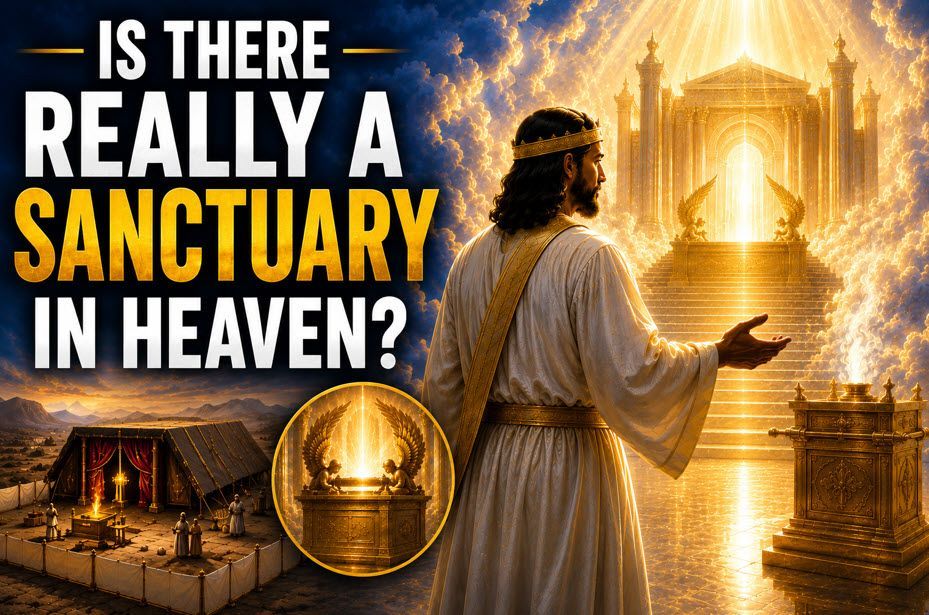
Leviticus 16 also uses this language when describing the high priest’s entrance into the Most Holy Place on the Day of Atonement:
“Speak unto Aaron thy brother, that he come not at all times into the holy place within the vail before the mercy seat, which is upon the ark; that he die not.” —Leviticus 16:2
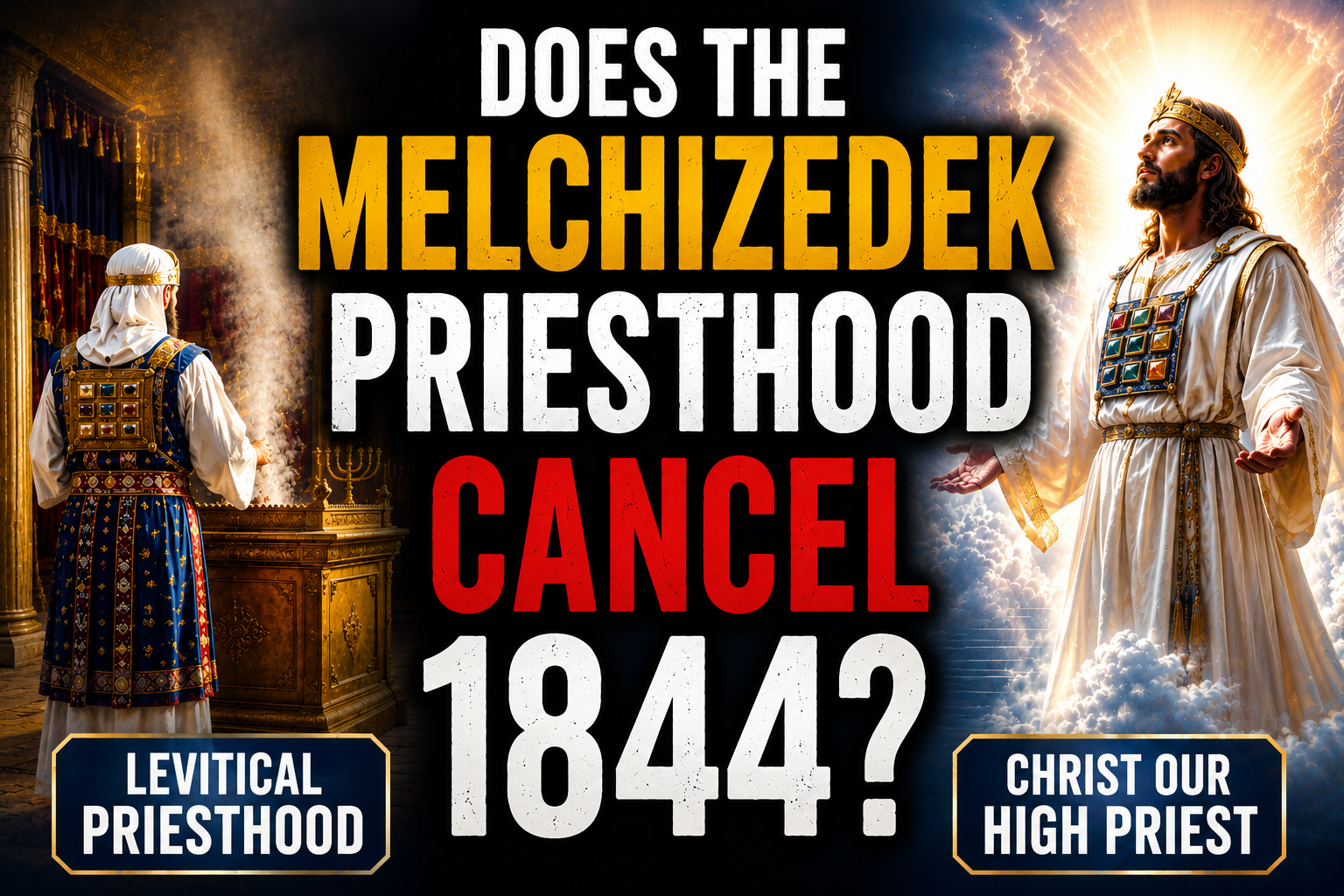
Because the book of Hebrews uses the same phrase to describe Christ's entrance into the sanctuary, early critics such as Dudley M. Canright and Albion Ballenger argued that Christ must have entered the Most Holy Place at His ascension.
This is a serious allegation. If Jesus went within the Most Holy Place upon His ascension, then this disqualifies the whole theology around 1844 and essentially nullifies the Seventh-day Adventist message.
As a result of these allegations, Seventh-day Adventists have traditionally defended 1844 in one of the following two ways:
The Two-Veils Explanation
One common Adventist response is that the earthly sanctuary had two veils. The first hanging formed the entrance into the sanctuary itself:
“And thou shalt make an hanging for the door of the tent, of blue, and purple, and scarlet, and fine twined linen.” —Exodus 26:36
The second veil divided the Holy Place from the Most Holy Place:
“And after the second veil, the tabernacle which is called the Holiest of all.” —Hebrews 9:3
This argument is logical. Hebrews 9:3 explicitly calls the inner curtain the “second veil,” which naturally implies the existence of a first.
Therefore, when Hebrews says that Christ entered “within the veil,” because it did not identify it as the second veil, Christ must have entered through the first veil and into the sanctuary as a whole.
However, when we compare the "within the veil" phrase in the Septuagint (Greek translation of the Old Testament) with the original Greek translation of the New Testament, we discover that the writer of Hebrews used the same words that the Old Testament writers used to determine the veil to the Most Holy Place. Thus, the objection remains that the phrase “within the veil” has a strong Old Testament association with the Most Holy Place. The two-veils explanation therefore does not resolve this dilemma.
Another problem this view faces is found in Hebrews 9:12, which says "...by his own blood he entered in once into the holy place, having obtained eternal redemption for us." What many may not know is that the Holy Place, in this text, is in the plural tense. It is widely believed that the plurality of the Holy Place in the original language refers to both compartments of the sanctuary. Thus, it is believed that when Jesus entered the heavenly sanctuary, he entered both the Holy Place and the Most Holy Place.
The Inauguration Explanation
Another Adventist interpretation suggests that Jesus did enter the Most Holy Place in AD 31, but only temporarily, to inaugurate or dedicate the heavenly sanctuary.
The Old Testament sanctuary was indeed dedicated before its regular services began. Hebrews also uses language connected with dedication:
“Whereupon neither the first testament was dedicated without blood.” —Hebrews 9:18
Proponents of this perspective point out that Hebrews 10:19-20 utilizes the same word when it says the following:
"Having therefore, brethren, boldness to enter into the holiest by the blood of Jesus, By a new and living way, which he hath consecrated for us, through the veil, that is to say, his flesh."
According to this theory, Christ entered the entire sanctuary at His ascension as part of an inauguration ceremony. Thus, Christ did go within the veil, into the Most Holy Place, but He did so temporarily.
Although this interpretation has been accepted by many Adventists, it presents a few problems
1. Hebrews 9:18 appears primarily to describe the dedication of the covenant rather than explicitly describing the dedication of the heavenly sanctuary. The text says that the “first testament,” or the Old Covenant, was dedicated with blood. Thus, the reference to the inauguration in Hebrews 10:19-20 seems to, in like manner, refer to the inauguration of the New Covenant. Can this include the heavenly sanctuary? Yes, but the context of the verse seems to focus on the "new living way" of the covenant, not necessarily the heavenly sanctuary.
2. Another issue is that the earthly sanctuary and its furniture were anointed before the sacrifices of Numbers 7 were presented:
“And it came to pass on the day that Moses had fully set up the tabernacle, and had anointed it, and sanctified it, and all the instruments thereof…” —Numbers 7:1
As you can see, the sanctuary was anointed first. But notice what happened afterward:
“And they brought their offering before the LORD, six covered wagons, and twelve oxen; a wagon for two of the princes, and for each one an ox: and they brought them before the tabernacle.” —Numbers 7:3
The issue here is that during the earthly sanctuary's inauguration, the priest anointed the sanctuary first. Then the sacrifices occurred. However, in the antitype, Jesus was sacrificed first, then He went and anointed the heavenly sanctuary.
3. Last, but certainly not least, Hiram Edson, who initially saw a vision of Jesus going into the Most Holy Place, said the following:
"He, for the first time, entered that day into the second apartment of that sanctuary." —Encyclopedia of Seventh-day Adventists.
Clearly, if Jesus entered the Most Holy Place for the first time in 1844, He couldn't have entered it upon His ascension. In case you don't believe in Hiram Edson's credibility, notice what Ellen White says:
"I saw that the time for the commandments of God to shine out to His people was when the door was opened in the inner apartment of the heavenly sanctuary where the ark is containing the commandments. This door was not opened until Jesus’ mediation was finished in the outer apartment of the sanctuary in 1844." —1LtMs, Ms 1, 1849
Although the inauguration theory explains the "within the veil" phraseology, we as Adventists must see that by adopting this position, we are essentially going against the scriptures and Ellen White in an attempt to preserve the sanctuary doctrine. As a student of the Bible, I hope that Adventists see this doctrine for what it is and understand it must be rejected.
The issue with all views of the veil controversy
It should be evident that all three views of the "within the veil" narrative are problematic.
- Although mainstream Christianity believes that Jesus went within the veil, they are not able to explain why Revelation 1:12-13 reveals Jesus among the seven golden candlesticks that are typically within the first compartment of the sanctuary.
- Although the two-veils theory correctly places Jesus in the first compartment of the sanctuary, it can't logically explain why that sanctuary is in the plural tense, nor can it account for why the writer of Hebrews uses the exact phrase from the Old Testament.
- The inauguration theory has a viable explanation of the within the veil phraseology, but comes with a plethora of other issues, including directly contradicting Hiram Edson and Ellen White, sequentially not matching the events in the types and shadows, and seemingly being out of context with the narrative in the book of Hebrews.
So if all three options are problematic, how are we to explain Christ's entrance within the veil? The answer is actually hidden in plain sight; however, in order to see it, we must understand how the writer of Hebrews viewed Christ's role within the veil.
Function Helps Determine Location
To understand where Jesus went at His ascension, we should first ask what He went there to do.
Paul writes:
“It is Christ that died, yea rather, that is risen again, who is even at the right hand of God, who also maketh intercession for us.” —Romans 8:34
Hebrews likewise declares:
“Wherefore he is able also to save them to the uttermost that come unto God by him, seeing he ever liveth to make intercession for them.” —Hebrews 7:25
Christ’s post-ascension ministry is therefore described as a ministry of intercession. What you must understand is that in the sanctuary system, intercession was especially associated with the altar of incense.
"The altar of incense represented the Son of God in his human nature, and the incense burned thereon typified his pleading for his people. The continual intercession of Christ was represented by the daily burning of incense thereon, morning and evening."— Matthew Henry Commentary on Exodus 30:1-10
"The altar is the place of worship and intercession before the throne of God. More than any other piece of furniture in the Holy Place."— Rev. John Schultz: Commentary to the Book of Exodus, p. 163
Scholars believe the Altar of Incense represents intercession because the scriptures reveal the priests went daily before the altar as a representation of God's people:
“And Aaron shall burn thereon sweet incense every morning: when he dresseth the lamps, he shall burn incense upon it.” —Exodus 30:7
The incense represented the prayers of God’s people:
“Let my prayer be set forth before thee as incense; and the lifting up of my hands as the evening sacrifice.” —Psalm 141:2
Revelation also connects incense with prayer:
“And the smoke of the incense, which came with the prayers of the saints, ascended up before God out of the angel’s hand.” —Revelation 8:4
Thus, we should see that if Christ ascended to intercede, the sanctuary location that most directly corresponds to that work is the altar of incense.
The Altar Closest to God’s Presence
The altar of incense stood in the Holy Place, immediately before the inner veil.
God told Moses:
“And thou shalt put it before the vail that is by the ark of the testimony, before the mercy seat that is over the testimony, where I will meet with thee.” —Exodus 30:6
This altar was physically outside the Most Holy Place, but it stood directly in front of the Ark and mercy seat. During the daily ministry, it represented the closest approach the priest could make to the immediate presence of God.
Ellen White described the significance of this ministry:
“In the offering of incense the priest was brought more directly into the presence of God than in any other act of the daily ministration.” —Patriarchs and Prophets, p. 353
The altar therefore occupied a unique position. It was in the Holy Place geographically, but its ministry was directed toward the mercy seat behind the veil. This distinction becomes extremely important in Hebrews 9.
The Surprising Arrangement in Hebrews 9
Hebrews 9 describes the furniture of the earthly sanctuary; however, notice something strange about how the writer arranges the furniture:
“For there was a tabernacle made; the first, wherein was the candlestick, and the table, and the shewbread; which is called the sanctuary.” —Hebrews 9:2
The writer mentions the lampstand and the table of showbread in the first compartment. But the altar of incense is noticeably absent. Notice how he then describes the second compartment:
“And after the second veil, the tabernacle which is called the Holiest of all; which had the golden censer, and the ark of the covenant overlaid round about with gold.” —Hebrews 9:3–4
The word translated “golden censer” can refer either to a hand-held censer or to the golden altar of incense. Many interpreters understand the passage as referring to the hand-held censer that was utilized on the Day of Atonement. This would make the narrative of Hebrews 9 primarily refer to that yearly service. However, there are two issues with this idea:
- The hand-held censer was never located in the Most Holy Place. We know this because on the Day of Atonement, it had to be brought within the veil.
"And he shall take a censer full of burning coals of fire from off the altar before the LORD, and his hands full of sweet incense beaten small, and bring it within the vail."—Leviticus 16:12
- The Altar of Incense was still utilized on the Day of Atonement:
"And he shall go out unto the altar that is before the LORD, and make an atonement for it..." —Leviticus 16:18
Thus, we know that the book of Hebrews' usage of censer refers to the Altar of Incense.
However, this creates an apparent dilemma. The altar of incense did not physically stand behind the second veil. It stood in the Holy Place. The question is, why does the writer of Hebrews place the Altar of Incense within the veil of the Most Holy Place?
Position or Possession?
The answer is found in 1 Kings 6:22:
“And the whole house he overlaid with gold, until he had finished all the house: also the whole altar that was by the oracle he overlaid with gold.”
What you may not understand is that in the Old Testament, the Most Holy Place was called "the oracle." In addition to that, you also must know that the phrase translated “by the oracle” can carry more than a simple geographical meaning. It can indicate that the altar belonged to, or was associated with, the inner sanctuary.
Regarding this verse, Cambridge Bible for Schools and Colleges says the following:
"The preposition is not significant of position, but of possession. Read ‘the whole altar that belonged to the oracle.’ The priest who offered incense continually on this altar in the holy place could not enter the most holy place, but the altar on which the offering was made, though standing without, was looked upon as a part of the more sacred portion of the building, and placed close to the dividing wall."
Notice how Ellicott's Commentary for English Readers explains this:
"This is the altar of incense, which, although it stood before the veil, and therefore in the Holy place, was considered to belong in idea rather to the Holy of Holies…Probably this is the explanation of the well-known passage in the Epistle to the Hebrews (Heb 9:4), where the Holiest place is said to have “had the altar of incense” (wrongly rendered “censer” in our Authorised Version)."
Although the altar physically stood before the veil, it functionally belonged to the Most Holy Place because its incense ascended toward the mercy seat and the presence of God. You will notice a number of translations have rendered 1Kings 6:22 as the altar that belonged to the Most Holy Place. Here are a few:
"So he overlaid the whole interior with gold. He also overlaid with gold the altar that belonged to the inner sanctuary." NIV
"So he finished overlaying the entire Temple with gold, including the altar that belonged to the Most Holy Place." NLT
"And the whole house he overlaid with gold, until all the house was finished: also the whole altar that belonged to the oracle he overlaid with gold." ASV
Now you can begin to understand why the writer of Hebrews placed the Altar of Incense within the veil with the Ark of the Covenant, while knowing it physically stood outside the curtain.
The altar stood in the Holy Place, but it belonged in purpose to the ministry of the inner sanctuary. In other words, geographically, the Altar of Incense was in the Holy Place, but functionally, it was considered part of the Most Holy Place!
Did Jesus Enter “Within the Veil” in AD 31?
In 31AD, Christ ascended to perform the work of intercession. The altar of incense represented that intercessory ministry. Although the altar stood physically in the Holy Place, Hebrews associated it with the Most Holy Place because it belonged functionally to the ministry before God’s throne.
Thus, Christ could enter the heavenly sanctuary, minister at the antitypical Altar of Incense and be described as entering “within the veil,” while still carrying out the work represented by the first compartment. This is not merely a geographical argument. It is a functional argument. The question is not only, “In which room was Christ?” The question is also, “What ministry was Christ performing?” His function determines His location, and Hebrews says that that location is "within the veil" although it was physically outside the veil.
The Father and the Altar of Incense
One problem that we must also solve is how Christ sat next to His Father when He ascended into the heavenly sanctuary. Although the Altar of Incense was functionally in the Most Holy Place, it was still in the Holy Place. How can this be next to God?
Revelation 9:13 explains this seemingly puzzling conundrum. Notice how it describes a voice coming from the golden altar:
“And the sixth angel sounded, and I heard a voice from the four horns of the golden altar which is before God.”
It is logical that the voice John heard was the voice of God. However, notice the prophet heard God's voice coming from the Golden Altar and not the Ark of the Covenant. This reveals what occurred upon Christ's ascension.
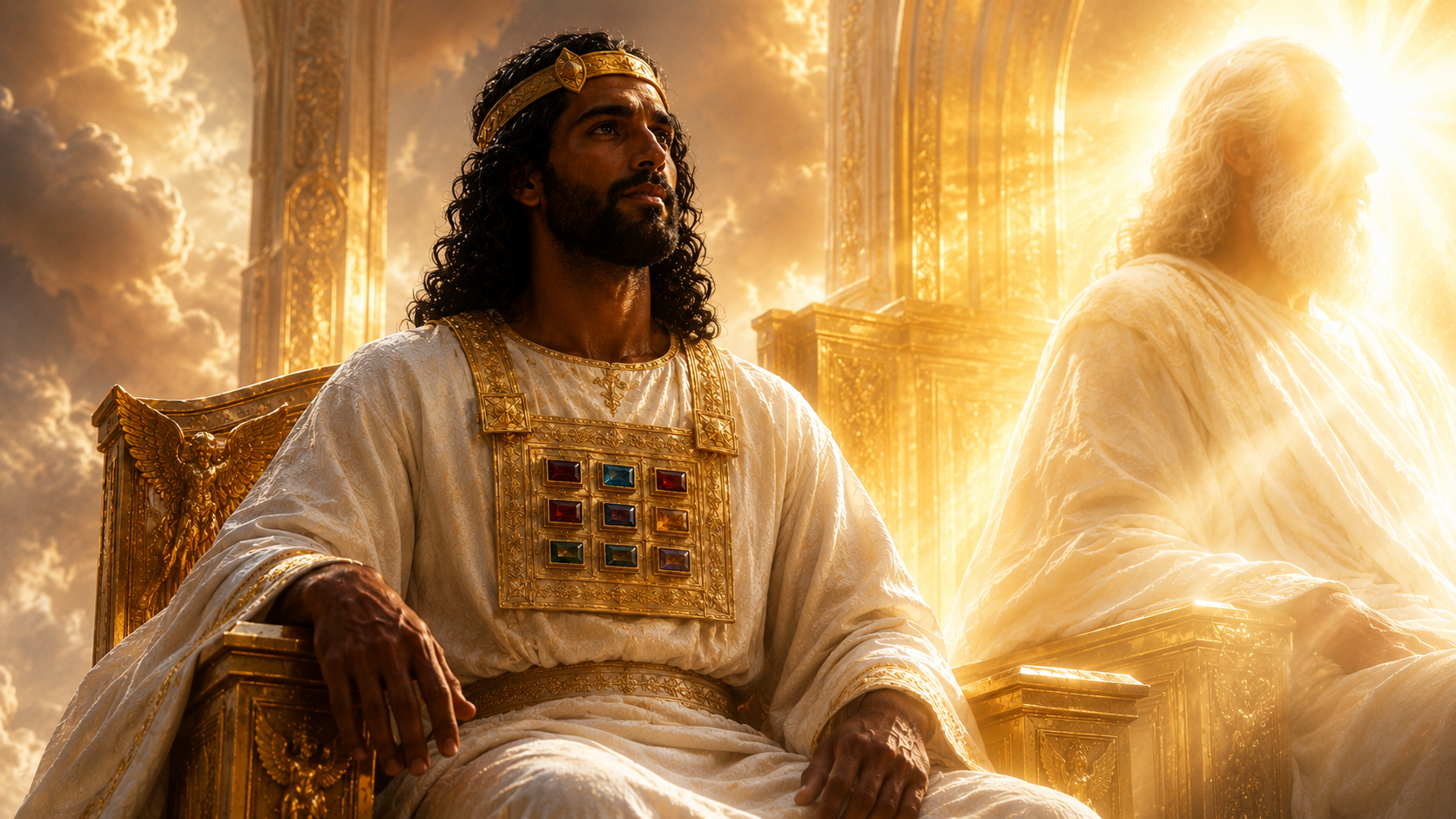
In 31 AD, when Christ ascended to the heavenly sanctuary, He went to the Altar of Incense where He began interceding for humanity. However, the Father met Christ at the Altar of Incense, and for 1810 years Christ advocated for our salvation. In 1844, God would then go into the Most Holy Place to begin the final work of Judgment where Christ would also follow him.
This confirms the view Ellen White had of Christ's transition from the first compartment to the second compartment. Notice what she saw:
"I saw the Father rise from the throne, and in a flaming chariot go into the holy of holies within the veil, and sit down. [...] Then a cloudy chariot, with wheels like flaming fire, surrounded by angels, came to where Jesus was. He stepped into the chariot and was borne to the holiest, where the Father sat." Ms1, 1846
Our intercessor “Within the Veil”
Hebrews 6 identifies Jesus as our forerunner.
Hebrews 7 emphasizes His continual intercession.
Hebrews 8 presents Him as the minister of the true sanctuary.
Hebrews 9 associates the altar of incense with the inner sanctuary.
Taken together, these passages reveal that Christ entered the heavenly sanctuary to begin an intercessory ministry symbolized by the altar of incense.
The altar stood in the Holy Place but belonged functionally to the Most Holy Place. Therefore, the writer of Hebrews used inner-sanctuary language while describing a ministry carried out in the first-compartment phase of Christ’s heavenly work.
Conclusion
The Altar of Incense was physically located in the Holy Place, yet Scripture treated it as belonging to the Most Holy Place because of its direct relationship to the Ark, the mercy seat, and the presence of God.
When Jesus ascended, He began His work of intercession. That work corresponds to the Altar of Incense. He entered “within the veil” in the sense presented by Hebrews, while carrying out the ministry represented by the Holy Place.
Then, in 1844, Christ entered the final phase of His priestly work, represented by the Day of Atonement and the cleansing of the heavenly sanctuary.
The sanctuary message remains centered on Jesus.
He is our sacrifice.
He is our High Priest.
He is our intercessor.
He is our advocate.
And when His heavenly ministry is complete, He will return to take His people home.