
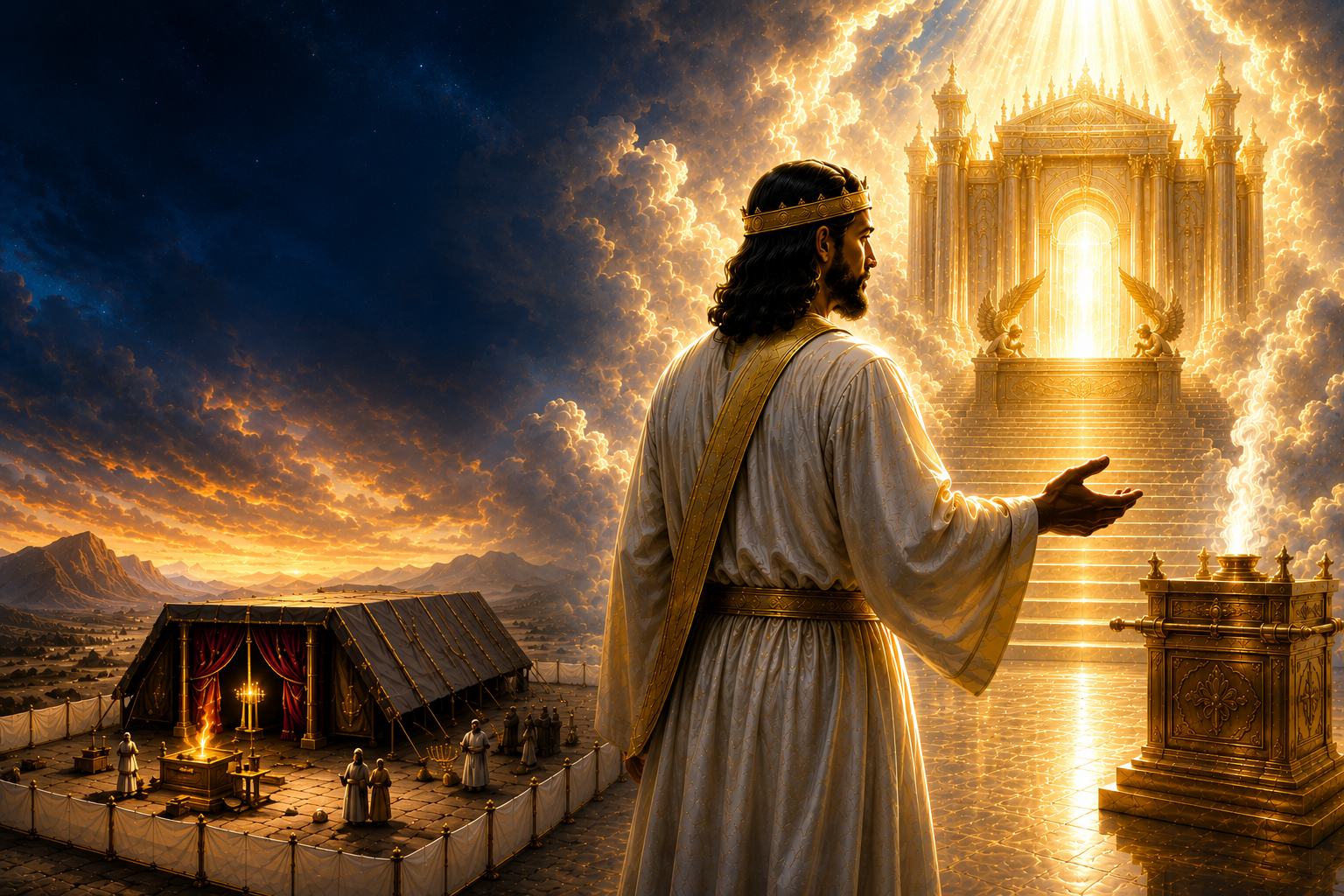
Few doctrines are more distinctive to Seventh-day Adventists than the belief in a literal sanctuary in heaven. As Adventists, we teach that Jesus Christ is presently ministering there as our High Priest and that this heavenly sanctuary is central to understanding Christ's work of intercession and judgment.
Yet many Christians reject this idea outright.
The most common objection comes from Hebrews 9:24:
"For Christ is not entered into the holy places made with hands, which are the figures of the true; but into heaven itself, now to appear in the presence of God for us."
Many read this verse and conclude that there is no actual sanctuary in heaven. They argue that Christ did not enter a heavenly structure but simply entered heaven itself. Thus, the heavenly sanctuary is reduced to a symbol and not a literal reality.
But is that what the Bible teaches?
A careful examination of Scripture reveals the exact opposite.
The Heavenly Pattern Shown to Moses
To understand the heavenly sanctuary, we must begin in the wilderness with Moses.
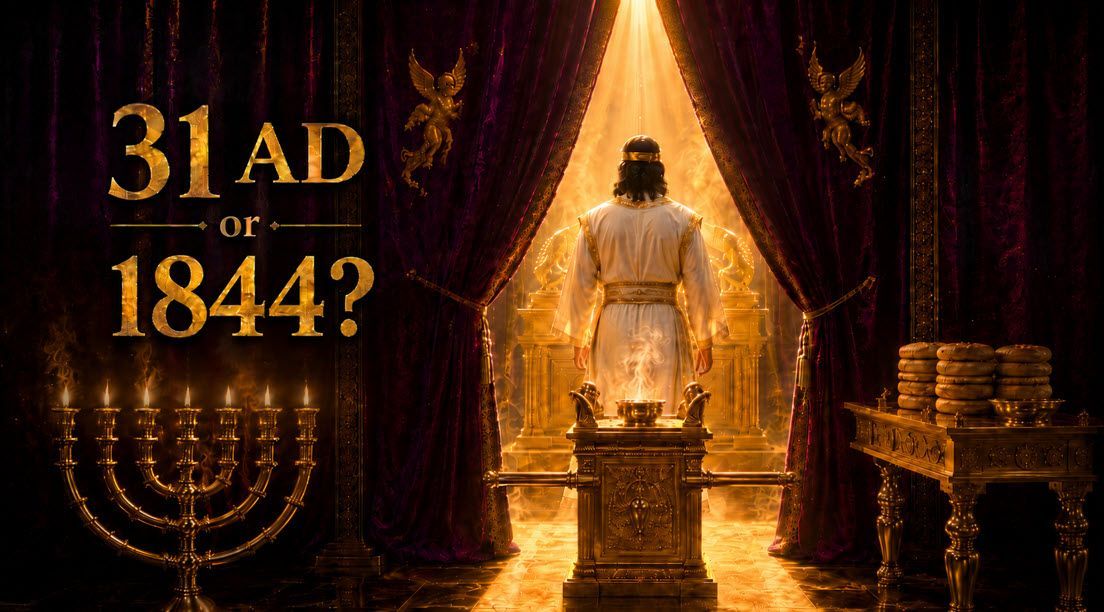
When God instructed Moses to build the earthly sanctuary, He repeatedly emphasized that it was to be constructed according to a specific pattern:
"According to all that I shew thee, after the pattern of the tabernacle, and the pattern of all the instruments thereof, even so shall ye make it." (Exodus 25:9)
Again, God instructed:
"And look that thou make them after their pattern, which was shewed thee in the mount." (Exodus 25:40)
The earthly sanctuary was not an original design. It was built according to a pattern that God revealed to Moses.
But what exactly was Moses shown? The answer is found in the book of Hebrews.
The Earthly Sanctuary Was a Shadow of Heavenly Things
Hebrews 8:5 describes the earthly priests as those:
"Who serve unto the example and shadow of heavenly things..."
A shadow always points to something real.
A blueprint points to an actual building.
A model points to an original.
Thus, the sanctuary service was not an end in itself. Every sacrifice, every piece of furniture, every priestly ministry pointed beyond itself to a greater reality— a reality that teaches us that the earthly sanctuary was God's object lesson designed to teach humanity about a heavenly sanctuary that already existed.
Christ Ministers in the True Sanctuary
Hebrews leaves little room for misunderstanding. After describing Christ's ministry, the author writes:
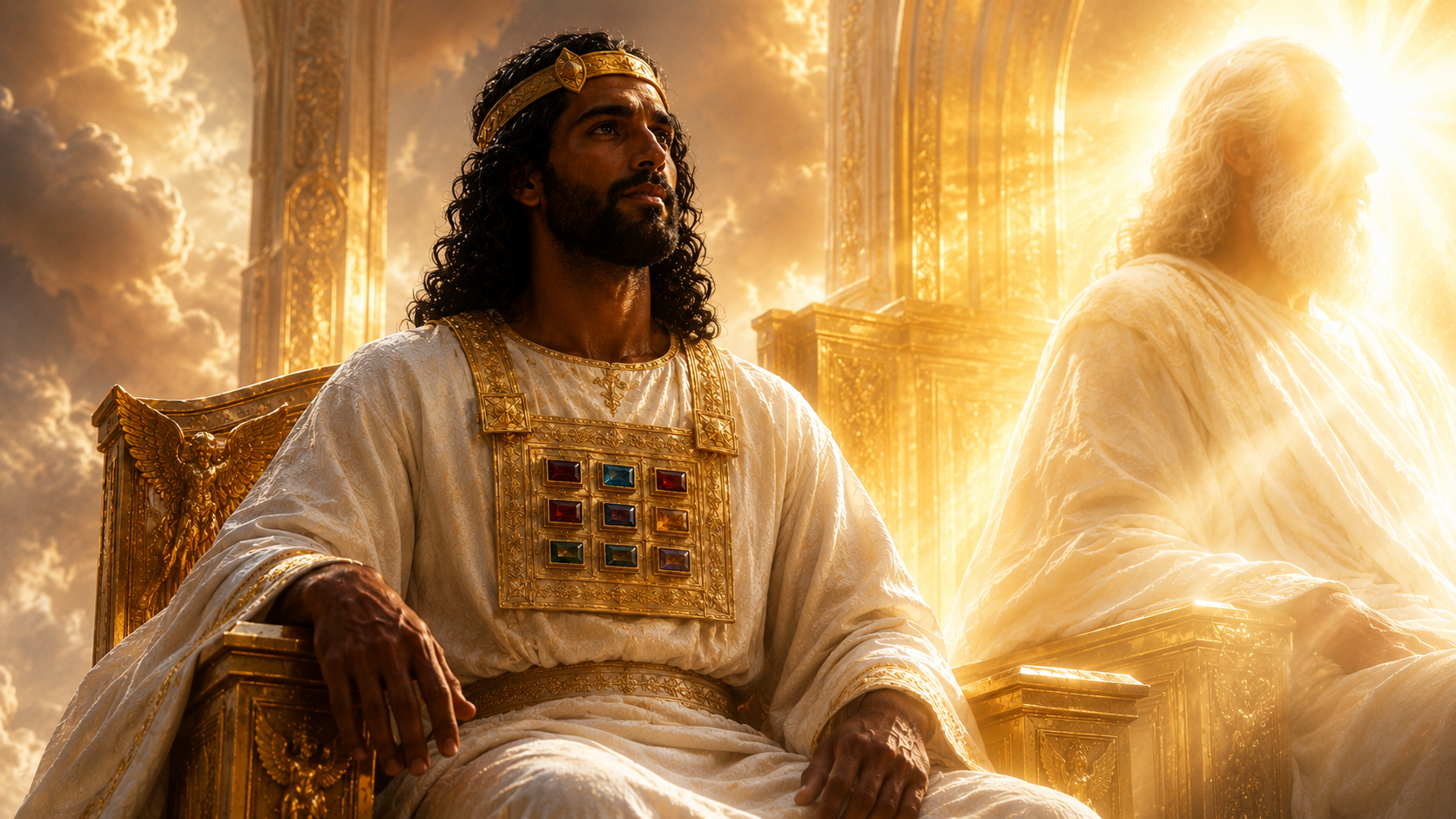
"Now of the things which we have spoken this is the sum: We have such an high priest, who is set on the right hand of the throne of the Majesty in the heavens; A minister of the sanctuary, and of the true tabernacle, which the Lord pitched, and not man." (Hebrews 8:1-2)
Notice the language carefully. Christ is called, "A minister of the sanctuary."
Not merely a minister in heaven. Not merely one who stands before God. He is specifically identified as a minister of the sanctuary and of the true tabernacle. What does the author of Hebrews mean by the word "minister"? In the original language, the word for minister is leitourgos. According to the Strong's Lexicon, this Greek word means, "a functionary in the Temple."
How can Christ be a functionary in a temple that doesn't exist?
What Does Hebrews 9:24 Actually Mean?
Let's go back to the original objection. Hebrews 9:24 states:
"For Christ is not entered into the holy places made with hands, which are the figures of the true; but into heaven itself..."
Many assume that "heaven itself" means there cannot be a sanctuary in heaven. But that is not what the verse says. The passage contrasts the earthly sanctuary with the heavenly reality. The earthly sanctuary was "made with hands." It was only a figure or copy of the true. Christ entered the original.
The phrase "heaven itself" tells us where the true sanctuary is located. It does not deny the sanctuary's existence. In fact, the verse assumes the existence of a heavenly sanctuary because the earthly sanctuary is called a figure of "the true." A figure must point to something real.
Heaven and the Sanctuary Are Intrinsically Connected
One of the reasons people misunderstand Hebrews 9:24 is because they assume heaven and the sanctuary are separate concepts. However, consider Jesus' statement:
"In my Father's house are many mansions." (John 14:2)
If someone enters one of those mansions, have they entered the Father's house?
Certainly. The mansion is part of the Father's house. The two are inseparably connected.
However, I want you to see that the same principle applies to the heavenly sanctuary!
The sanctuary is not separate from heaven. It exists within heaven; however, it is also part of the heavenly realm itself. Thus, when Hebrews says Christ entered "heaven itself," it does not eliminate the sanctuary; it simply emphasizes that Christ entered a specific part of heaven.
The Same Principle Applies to God's Throne
The Bible uses similar language concerning God's throne. Notice what the prophet Isaiah saw the Lord sitting upon:
"The Lord sitting upon a throne..." (Isaiah 6:1)
David declared:
"The LORD is in his holy temple, the LORD'S throne is in heaven." (Psalm 11:4)
Notice in the above texts that God has a throne. Not only does He have a throne, but notice that this throne is in heaven. You may be wondering why these verses are relevant to our current study. The relevance becomes clear when you read Acts 7:49, where God says:
"Heaven is my throne..."
If heaven is God's throne, does this mean there is no literal throne? Of course not. However, you can see that if we applied the same logic to the throne that mainstream Christians applied to the heavenly sanctuary, we would have to conclude that God's heavenly throne doesn't exist!
Scripture repeatedly describes God's throne as a real throne located in heaven.
The statement simply emphasizes the intimate connection between God's throne and the heavenly realm. Likewise, Hebrews 9:24 does not eliminate the sanctuary. It highlights the connection between the sanctuary and heaven itself.
John Saw a Temple in Heaven
The strongest evidence may come from the book of Revelation.
John writes:
"And the temple of God was opened in heaven..." (Revelation 11:19)
Notice the distinction. The text does not say the temple is heaven. It says the temple was opened in heaven. In essence, the temple exists within heaven.
This verse alone demonstrates that Scripture recognizes a heavenly temple as a distinct reality.
The Biblical Conclusion
The evidence is remarkably consistent. When Hebrews says Christ entered "heaven itself," it is no more denying the existence of a heavenly sanctuary than Acts 7:49 denies the existence of a heavenly throne.
The Bible frequently uses the larger realm of heaven to describe what exists within heaven.
God's throne is in heaven.
God's New Jerusalem is in heaven.
God's temple is in heaven.
And according to Hebrews, Christ ministers in a sanctuary in heaven.
Far from disproving the heavenly sanctuary, Hebrews confirms it. The biblical evidence leads to only one conclusion:
There really is a sanctuary in heaven, and Jesus Christ is ministering there today on behalf of His people. The question is, will you accept Him as your Lord and Savior today?