
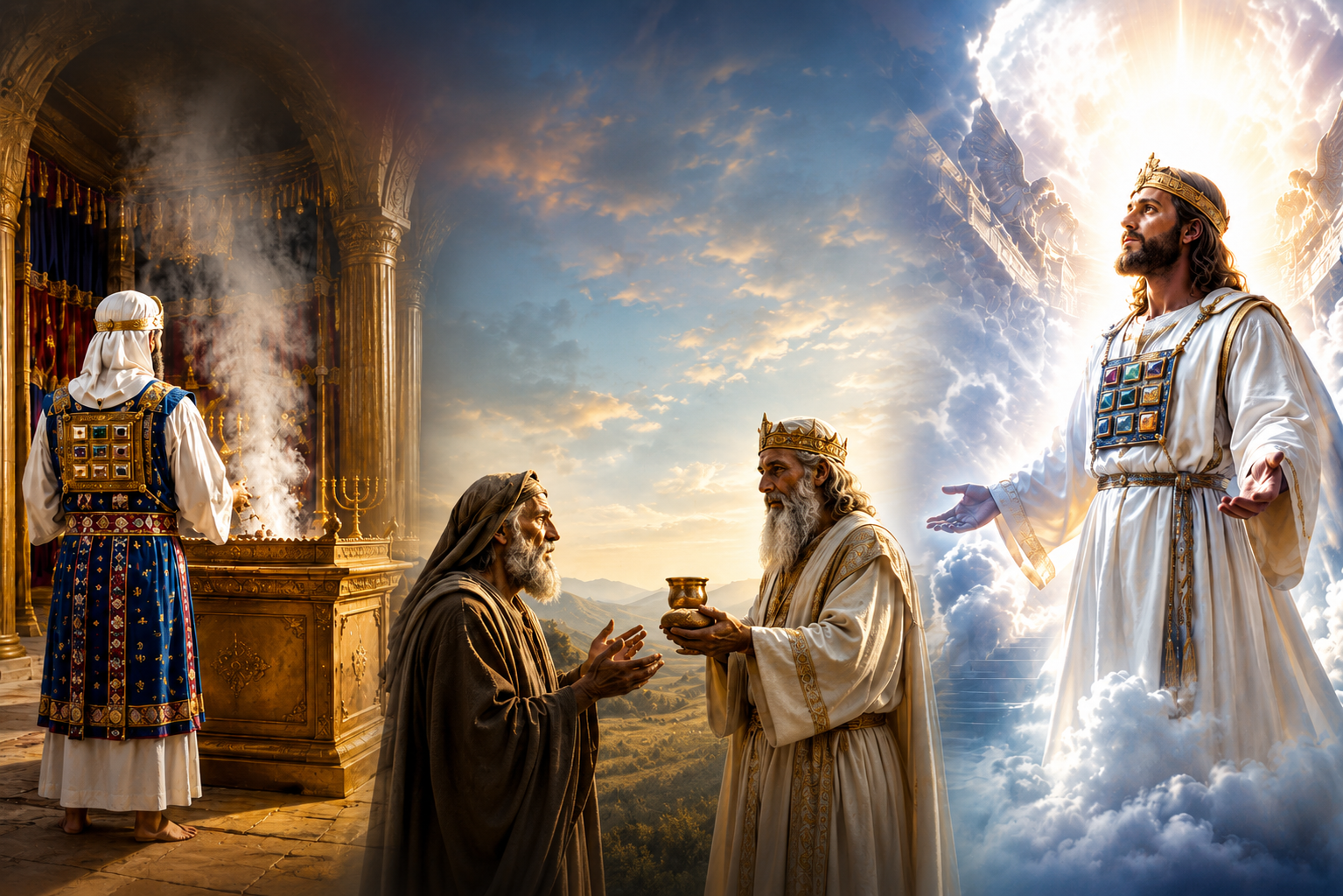
One of the most common objections raised against the sanctuary doctrine centers on the priesthood of Christ in the book of Hebrews.
The argument usually sounds like this:
“Jesus is a priest after the order of Melchizedek—not Aaron or Levi. Therefore His heavenly ministry has no resemblance whatsoever to the Levitical priesthood. If that is true, then the sanctuary doctrine, the cleansing of the sanctuary, and the investigative judgment have no biblical basis.”
At first glance, that argument can sound compelling.
But what does the Bible actually say?
Does Christ’s Melchizedek priesthood eliminate every sanctuary concept associated with the Levitical priesthood? Or does Hebrews teach something deeper?
The answer matters—because if Christ’s heavenly priesthood truly canceled all Levitical functions, then there would be no cleansing of the sanctuary, no heavenly ministry, and no biblical foundation for Daniel 8:14.
But Hebrews teaches the opposite. Christ’s Melchizedek priesthood is superior to the Levitical priesthood—yet that superiority does not erase the sanctuary functions fulfilled in heaven. It establishes them.
Why This Objection Matters
Hebrews 5:10 says Christ was:
“Called of God an high priest after the order of Melchizedek.”
Many mainstream Christians interpret this to mean Christ’s ministry has nothing in common with the Levitical priesthood. But think through what is actually at stake.
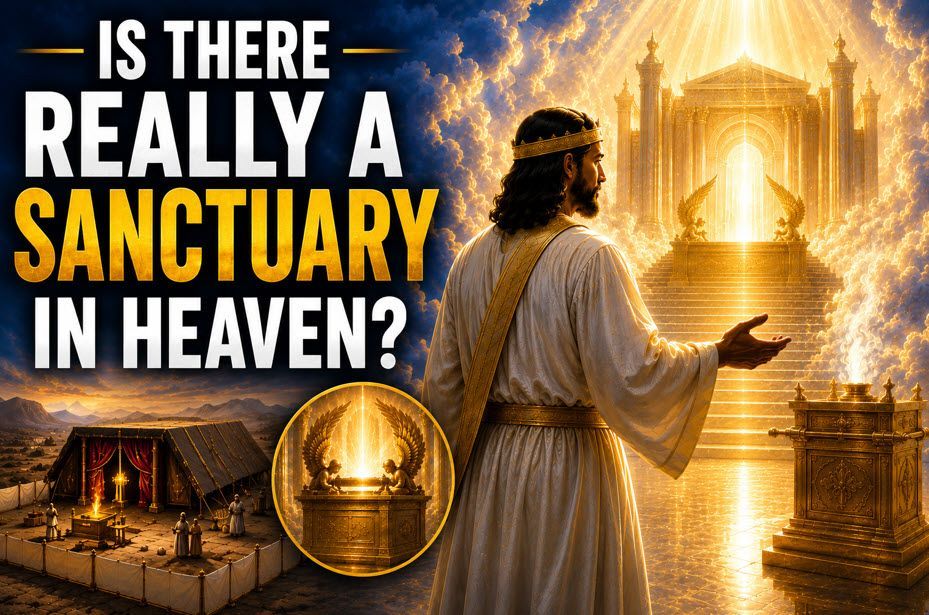
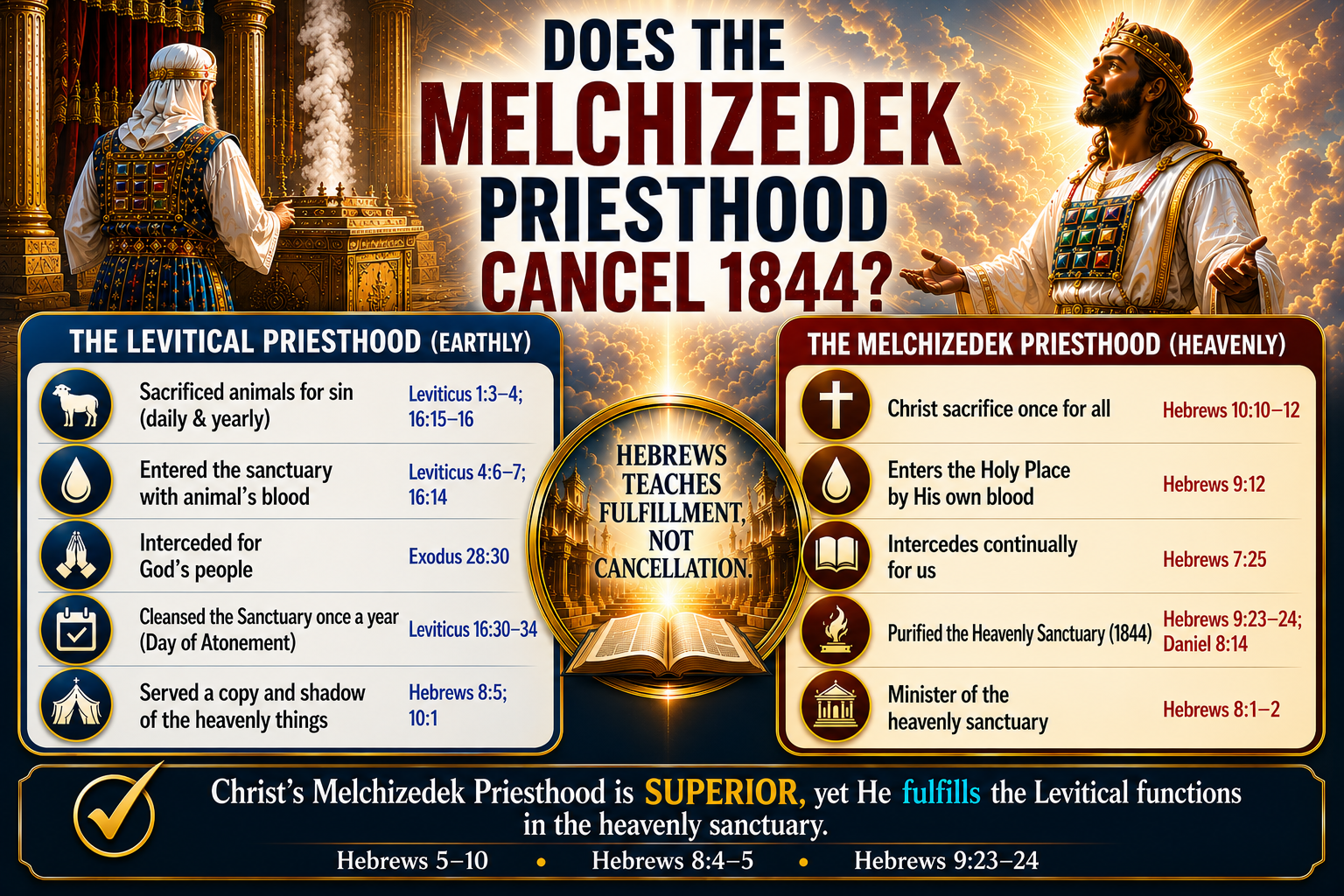
What did the Levitical priests do?
They:
- offered sacrifices for sin
- ministered in the sanctuary
- interceded for God’s people
- brought blood into the sanctuary
- participated in the yearly cleansing on the Day of Atonement
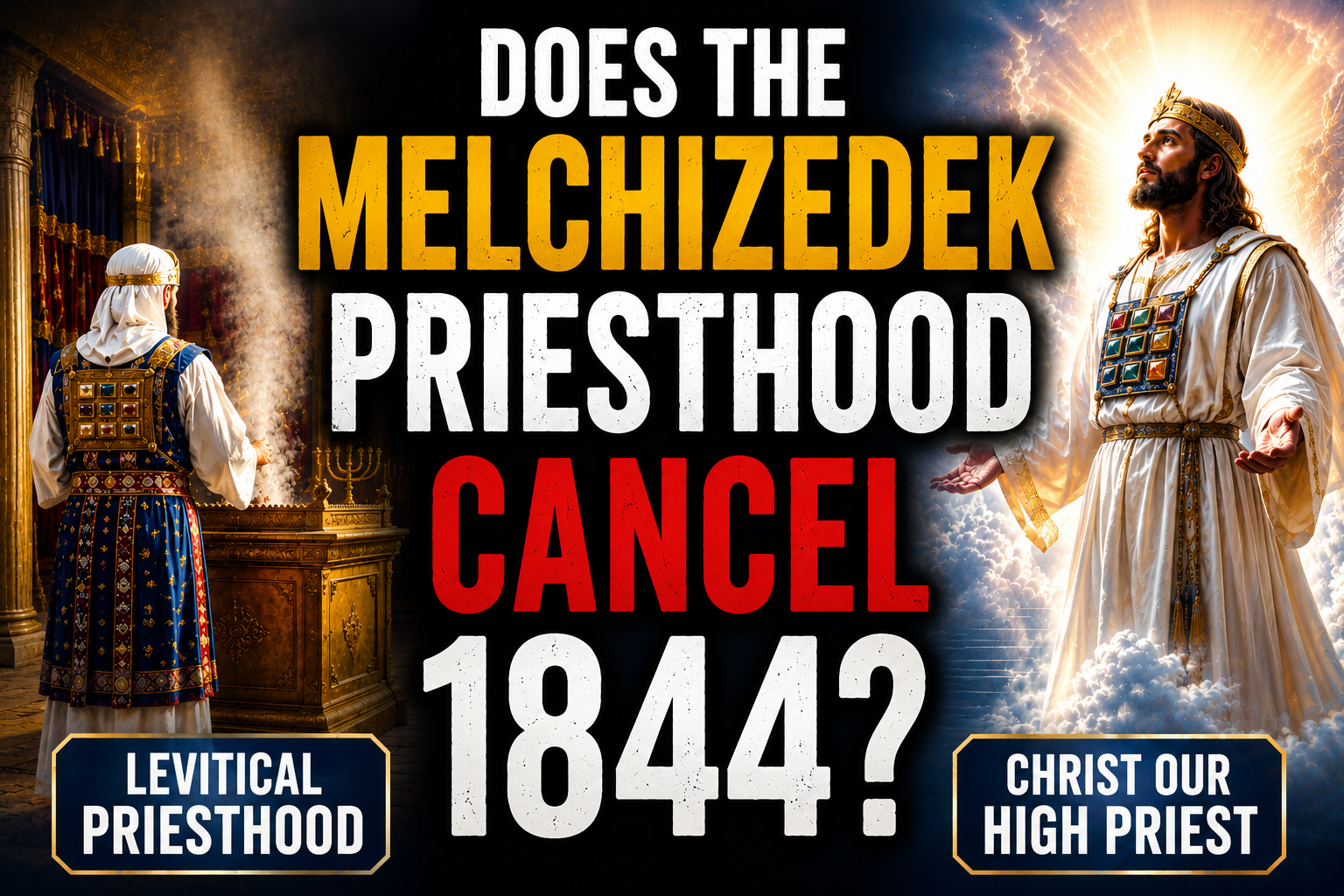
If Christ’s Melchizedek priesthood automatically cancels every one of those priestly functions, then the sanctuary doctrine collapses. So the real question becomes:
Does Hebrews remove Christ's sanctuary ministry… or explain how sanctuary ministry is fulfilled through Christ under the new covenant?
Understanding the Levitical Priesthood
The Levitical priesthood was established through Aaron and his sons.
Exodus 40:12–15 describes how God consecrated Aaron’s family to minister before Him.These priests belonged to the tribe of Levi and served in the earthly sanctuary.
Their ministry included:
- daily sacrifices
- intercession
- the blood ministry
- and the yearly cleansing of the sanctuary
But Scripture also teaches that this earthly system was never the final reality.
Hebrews 8:5 says they:
“Serve unto the example and shadow of heavenly things.”
The earthly sanctuary pointed beyond itself. It was a shadow. The substance would be fulfilled in Christ.
Who Was Melchizedek?
Melchizedek appears briefly in Genesis 14. After Abraham defeated the coalition of kings and rescued Lot, Melchizedek met him.
Genesis 14:18–20 says:
“And Melchizedek king of Salem brought forth bread and wine: and he was the priest of the most high God… and he blessed him…”
Melchizedek was both:
- king of Salem
- priest of the Most High God
Psalm 110:4 later applies his priesthood prophetically to Christ:
“Thou art a priest for ever after the order of Melchizedek.”
This is where Hebrews draws the connection. Christ is not descended from Levi.
He comes from Judah. Yet God Himself appoints Him as High Priest. That is Paul’s point.
The Context of Hebrews
Hebrews was written to Jewish Christians.
These believers understood:
- the sanctuary
- the sacrifices
- the priesthood
- and covenant language
They were also under pressure. Hebrews 10:33-34 references reproaches, afflictions, and the spoiling of goods. Because of persecution, some may have been tempted to return to the old covenant system. Paul writes to strengthen them. His message is clear: Do not go backward. Why? Because Christ is superior to everything the old covenant offered.
He is:
- superior to angels
- superior to Moses
- superior to the earthly priesthood
Thus when Paul introduces Melchizedek, he is proving Christ’s authority as the legitimate High Priest of the new covenant.
What Does “The Priesthood Being Changed” Mean?
Hebrews 7:11–12 says:
“If therefore perfection were by the Levitical priesthood… what further need was there that another priest should rise after the order of Melchizedek…? For the priesthood being changed, there is made of necessity a change also of the law.”
This is often used against the Adventists' view of the sanctuary doctrine. However, what we need to understand is that Paul is not arguing against heavenly ministry. He is explaining how the old covenant priesthood has transitioned from the old covenant and what that looks like under the new covenant.
The “law being changed” does not mean:
- God abolished all priestly ministry components that resembled the Levitical order
- heaven has no sanctuary
- the sanctuary pattern disappeared
It means the laws that governed the earthly priesthood changed because Christ fulfills them in a greater way.
Let me give you a few examples:
- The Old Covenant required a Levite Priest.
- However, Christ is a Melchizedekian Priest.
- The Old Covenant required animal sacrifice.
- Christ offers Himself once for all.
- The Old Covenant used animal blood.
- Christ enters by His own blood.
- The earthly priests ministered in shadows.
- Christ ministers in heavenly reality.
The ministry changed form. It did not vanish.
Hebrews Teaches Fulfillment—Not Cancellation
This is the heart of the issue.
Hebrews does not present Melchizedek and Levi as diametrically opposed.
Paul is not declaring that because Christ is a Melchizedekian Priest, all the Levitical concepts have no connection with Christ's heavenly ministration. He is clarifying that because Christ is our Melchizedekian High Priest, He fulfills what the earthly Levitical priesthood foreshadowed.
That is why Hebrews 8:4-5 says:
“...there are priests that offer gifts according to the law: Who serve unto the example and shadow of heavenly things, as Moses was admonished of God when he was about to make the tabernacle: for, See, saith he, that thou make all things according to the pattern shewed to thee in the mount.…”
What About THE CLEANSING OF THE SANCTUARY?
This is where Daniel 8:14 becomes important.
Daniel wrote:
“Unto two thousand and three hundred days; then shall the sanctuary be cleansed.”
And Hebrews 9:23 says:
“It was therefore necessary that the patterns of things in the heavens should be purified… but the heavenly things themselves with better sacrifices than these.”
That language matters.
The earthly sanctuary was cleansed.
The heavenly sanctuary is also presented as being purified.
The pattern continues.
But now it is fulfilled by Christ.
Final Thoughts
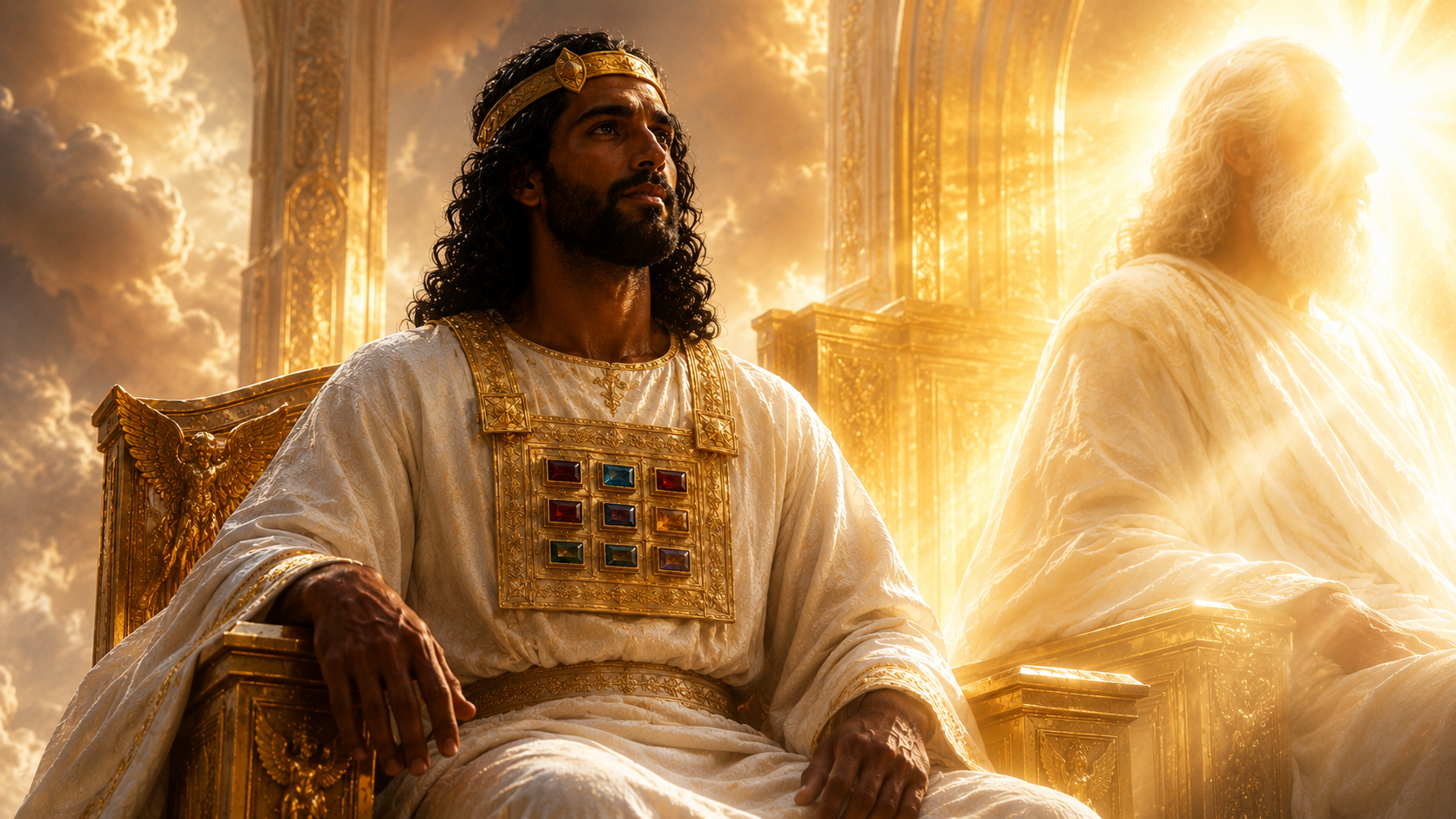
The Melchizedek priesthood does not cancel 1844. It confirms Christ’s authority as our heavenly High Priest.
It proves His priesthood is superior to Levi.
And once Hebrews establishes His authority, Paul then explains how sanctuary truths continue through Christ under the new covenant.
Hebrews teaches that the earthly sanctuary was the shadow, but Christ is the substance.
And the same Savior who offered Himself once for all now ministers for us in heaven as our great High Priest.
That is not a contradiction, it's a confirmation that Christ fulfills many of the Levitical functions as our Melchizedekian High Priest.