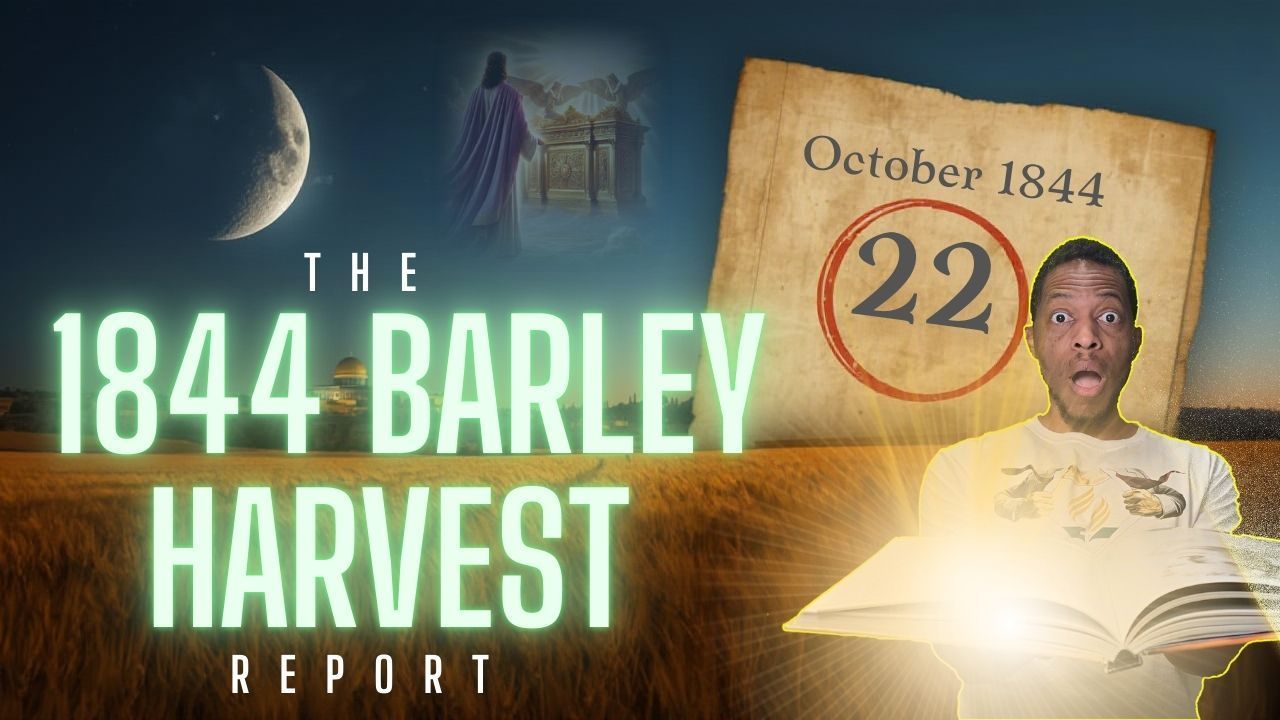
Knowing that the Jewish calendar was different from the Gregorian, Snow then had to determine when the tenth day of the seventh month occurred in 1844 according to the Hebrew reckoning.
Samuel Snow learned that there were two sects of Jews— Rabbinical and Karaite. He then discovered that the Rabbinical calculated the Jewish year using predetermined calculations, but the Karaite used the Biblical method. Let's briefly cover that method below:
The New Moon and the beginning of the biblical year
And God said, Let there be lights in the firmament of the heaven to divide the day from the night; and let them be for signs, and for seasons, and for days, and years. Genesis 1:14
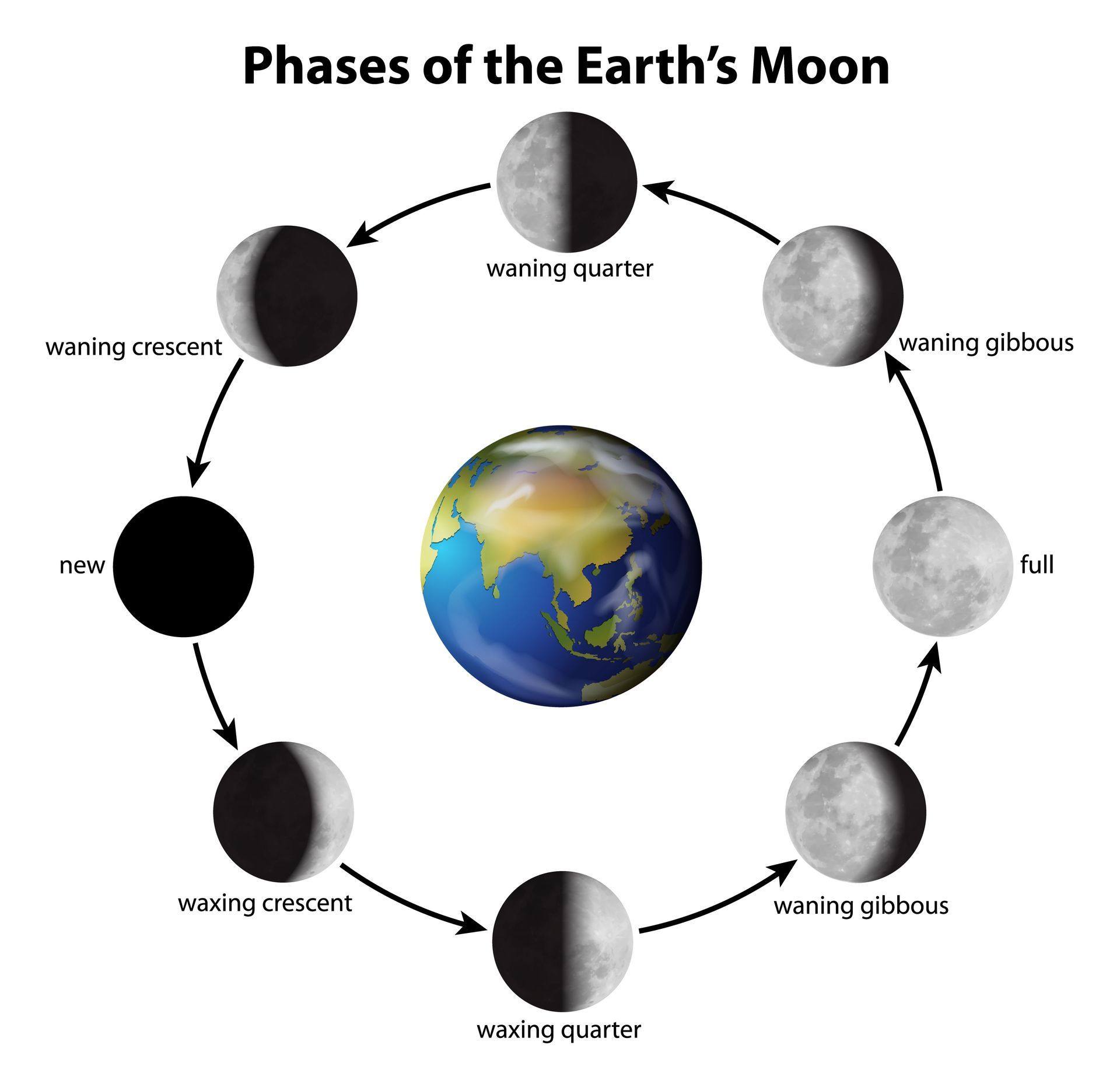
According to the text, the sun and moon were considered indicators that helped the Jews determine the seasons, days, and years. The Earth's rotation around the sun determined the year, and the moon's rotation around the Earth determined the month. However, as time continued, the moon's orbital cycle around the Earth fell out of sync with the Earth's orbital cycle around the sun. Although the Bible doesn't explicitly state it, there are various Biblical events that may be behind the apparent unsynchronization of the heavenly lights in the sky. However, at this time, all we know is that a lunar year, which is reckoned by the moon's 12 rotations around the earth, is approximately 10 days shorter than a solar year, which is reckoned by the earth's rotation around the sun. This, God, who is particular when it comes to time, gave His people a method to keep their calendars in synch.
The first thing we need to know is that the Biblical month began with the new moon.
The barley harvest and the beginning of the biblical year
God told the Jewish nation that the new year was to arrive at a specific time, according to Exodus 12:2:
This month shall be unto you the beginning of months: it shall be the first month of the year to you.
That month was known as Abib. It was also the same month that the Children of Israel left Egypt.
Observe
the month of Abib, and keep the passover unto the LORD thy God: for in the month of Abib the LORD thy God brought thee forth out of Egypt by night. Deuteronomy 16:1
The word Abib means "green ears of grain" or "freshly budding barley." We take this from Exodus 9:31, where the Biblical record says, "...the barley was smitten: for the barley was in the ear
[abib],
and the flax was bolled." Thus, the Jews understood that the first month of the year was when the barley was in abib, or when the grain is seen ripening. This is often understood to be at the beginning of the spring season.
You may be wondering why God would require the Jews to use the barley harvest in conjunction with the new moon when they could get the same results by taking the first new moon that would come after the 12th month every year. This would be true except for the fact that the Biblical new year did not start at the same time every year.
Remember, the lunar year is always shorter than the solar year. Thus, if the Jewish calendar went solely by the moon's rotational cycle around the earth, the Jewish years would begin to float every year in relation to the solar calendar.
In order to keep the Jewish calendar grounded and aligned with the solar year, God used the barley harvest. So every few years, God would delay the barley from ripening, causing the Jewish year to begin one month later. Thus, when you see a Jewish calendar with a 13th month (Adar II), that year they determined that the barley was not in abib around the new moon of their typical first month (called Nisan), and as a result, they intercalated or added an extra month that year. This is how God managed the divergence between the lunar year and the solar year for His people.
The early Adventists and the Karaite reckoning
Snow and the early Adventists learned that the Karaite reckoned their new year one month later than the Rabbinical new year.
"...the Karaite reckoning and was derived from the Karaite Jews, a small group who “still adhere to the letter of the Mosaic law, and commence [the year] with the new moon nearest the barley harvest in Judea ... which is one moon later than the Rabinical [sic] year."1
Rabbinical Jews in 1844 believed March was the beginning of the new year, thus, they celebrated Yom Kippur, or the Day of Atonement, on the seventh day of the 10th month, which in 1844 fell on September 23rd
for them.
Meanwhile, early Adventists concluded that the barley in 1844 could not be ripe in March, and that the Jews would have intercalated a 13th
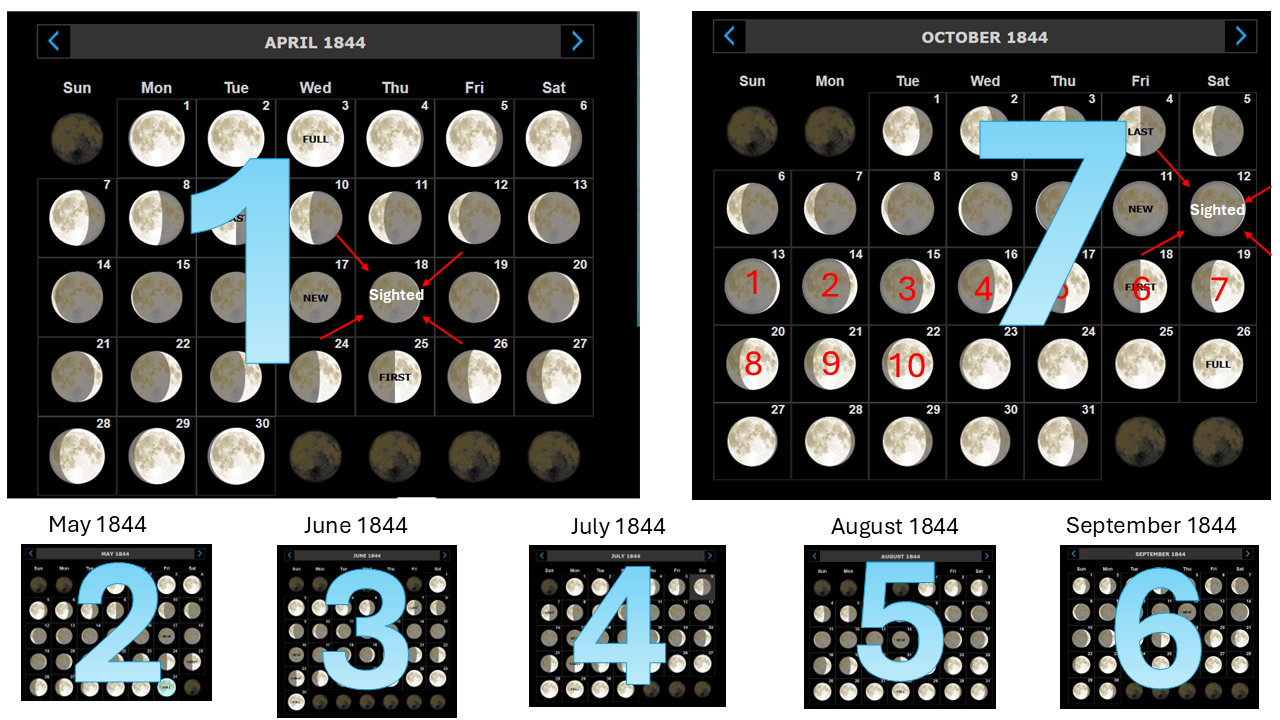
month in 1844. This would mean that the new year, according to the Karaite reckoning, began in April as opposed to March. Thus, the Karaites in 1844 should have celebrated their new year in April and their Day of Atonement would've occurred on October 22 of that year (see below).
This is how Samuel Snow and the early Advent believers, using the Karaite reckoning, determined that the Day of Atonement in 1844 fell on October 22nd.
Ellen White would later put her stamp of approval on this date, saying:
The tenth day of the seventh month, the great Day of Atonement, the time of the cleansing of the sanctuary, which in the year 1844 fell upon the twenty-second of October, was regarded as the time of the Lord’s coming. This was in harmony with the proofs already presented that the 2300 days would terminate in the autumn, and the conclusion seemed irresistible. —The Great Controversy p. 399
She also would say:
The computation of the prophetic periods on which that message was based, placing the close of the 2300 days in the autumn of 1844, stands without impeachment. —The Great Controversy p. 457
However, in the mid 20th century, the October 22nd date came under fire when E.S. Ballenger, a prominent critic of the Seventh-day Adventist Church, uncovered proof that the Karaites, in 1844, also celebrated the Day of Atonement on September 23rd.
The defenders of the creed declare that while the orthodox Jews may have celebrated the Day of Atonement on Sept. 23, the Karaite Jews observed it on Oct 22. We have made careful investigation, and we find that this is a false claim. The leading Karaite rabbi of Cairo, Egypt, Youseff Ibrahim Marzork, in reply to an inquiry as to the day on which they celebrated the atonement in 1844, wrote: "In the year 1844 it is on Monday 23rd September for the Karaite and Rabbinical."—The Gathering Call by E. S. Ballenger, May-June 1941, pp. 14-15.
Another source was found confirming this September date with the following words:
That Yom Kippur 1844 was celebrated by the Karaites in September and not October is confirmed by a Karaite Tomb Stone inscription cited by Abraham Firkowitz in his book Avnei Zicharon. —lit. Stones of Remembrance, published Vilna 1872, p. 242
Then, Nehemiah Gordon, one of the leading Karaites of the 21st century, also confirmed the veracity of the above two sources with a quote of his own:
Yom Kippur 1844 must have been celebrated in late September and not late October.— Nehemiah Gordon Karaite Korner
Methods Adventists commonly use to prove the October Day of Atonement
From the moment the leading Karaites confirmed the Day of Atonement in 1844 was in September, the Seventh-day Adventist Church has been under fire. This dating controversy has contributed to a good number of members leaving the flock. However, I've also seen many of our members double down on this date.
In my experience, Seventh-day Adventists have developed four main ways to combat the onslaught coming from our detractors:
- Find contradicting Karaite writings: It has been reported that there are writings of Karaites who did, in fact, celebrate the Day of Atonement in October of 1844. The idea behind this method is that, if we can prove that some Karaites did celebrate Yom Kippur in October of 1844, then we can suggest that there is dissension within the Karaite community and that a tiny minority within the community held the correct date while the majority were in error. As a result, the Adventist Church can still say that we follow the Karaite method, but not all Karaites use the correct method. —While I can see the wisdom in this method, in my opinion, it does not satisfy the claims set forth by our detractors. It may make us feel better about using the October date, but it does very little to
move the needle in the minds of leading Karaite Jews.
- Focus on Adventist writings only: There are a number of Adventists who focus strictly on the writings of our pioneers in order to prove the October 1844 date. Thus, their evidence consists of William Miller, Samuel Snow, and many of our other pioneers. —Although we know the Advent movement was established by God, we can't rely solely on their writings when witnessing to non-Adventists or proving our views to critics. Thus, 1844 needs to be proven outside of our pioneer writings to be valid.
- Planetary alignment charts: I have seen some Adventists even use the stars to prove the October date. While I won't even pretend that I understood these charts, I am intelligent enough to know that our critics have also disputed these claims.
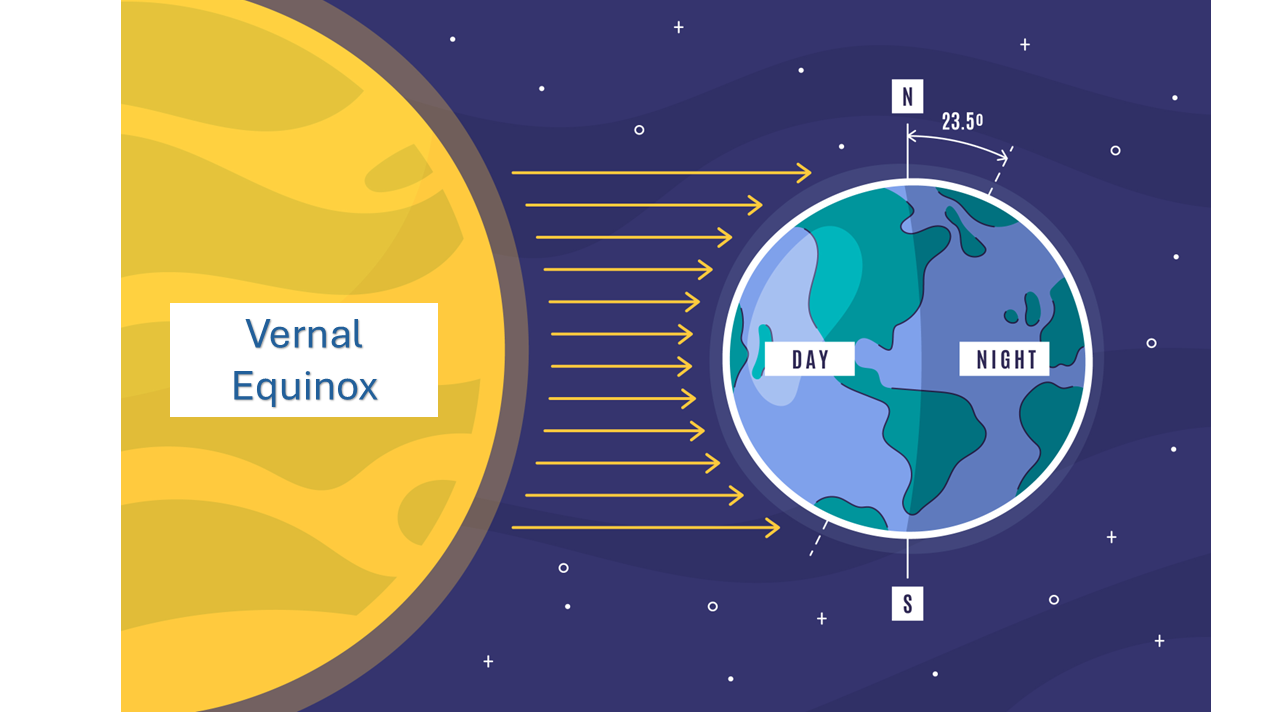
- Vernal Equinox: Among Adventists, the most popular method used to prove the October date is by using the vernal equinox. For those of you who may not be familiar with this phenomenon, please understand that the Earth is tilted on its axis so that the sun's rays do not evenly hit our world. However, there are two times a year when our planet sits up on its axis so that the sun's rays hit the planet evenly. These two days are called the vernal (also spring equinox) and the autumnal equinox (see example below).
In essence, none of these claims have really held up against those who are critical of our message. Most find themselves content with this reality; however, after researching these claims, I felt unsatisfied with the answers thus provided.
While I appreciate those who have honestly come to the defense of our church, I came to one conclusion—If the Seventh-Day Adventist Church is God's remnant, then how can there not be proof that the 1844 barley harvest occurred in April?
Proving October 22nd
I don't know about you, but the God that I know
HAD
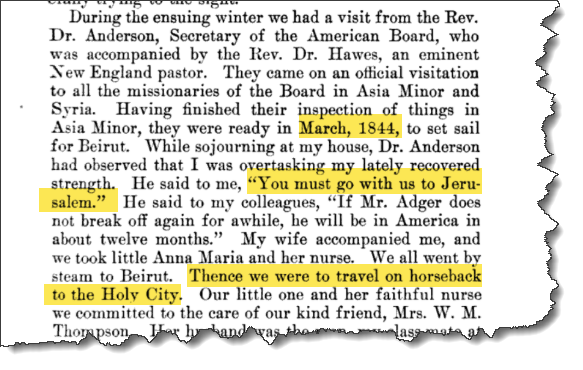
to have sent at least one person to Israel or Jerusalem in the spring of 1844. God, knowing this controversy would be brewing years later, would not only have sent someone to Israel, but He would've also inspired this individual to document the harvest in 1844. So, I dedicated around five months of my life to researching the truth of the 1844 Biblical calendar. This was my
only
study, and this was
all
that I studied.
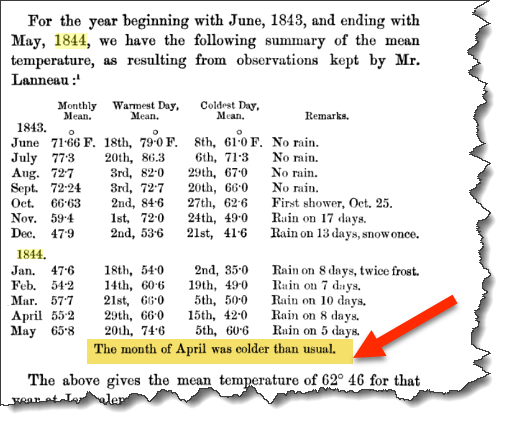
Essentially, the controversy boils down to this: If the barley harvest in 1844 began in March, then the Day of Atonement that year was September 23rd. And if the date was September 23rd, then that would mean our timing was flawed from the begining and that would call into question other parts of the doctrine. However, if the barley was not ripe until April, then we know the Day of Atonement was on October 22nd, and the Seventh-day Adventist Church is vindicated in the face of Evangelicals, Catholics, and Jews (Rabbinicals and Karaites).
So, for 5 months, I researched books, looked up library catalogues, utilized A.I., searched Google, and contacted universities around the world. And at the end of my research, I came to a shocking conclusion:
Not only did the Day of Atonement in 1844 occur in October, but a September Day of Atonement is virtually impossible!
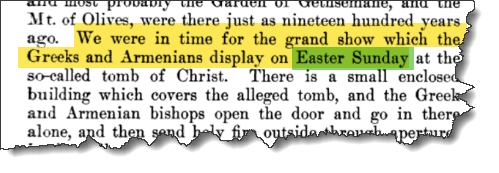
Below, I will reference my research. It will not utilize Karaite references, it will not refer to Adventist pioneers, planetary charts, or vernal equinoxes. Everything that you are about to read is directly from eye witnesses that lived or visited Jerusalem in the spring of 1844. However, we first must establish that the Jewish year had four visible indicators that confirmed that the new year was at hand.
The Four Visible Indicators of the Biblical New Year
Here are the four visible indicators that the Jews used to determine that the new year was upon them:
- Barley ripening: Barley must be in abib around the new moon in order to consider it a new year.
- Warming sun: Thus, the warming sun reveals the beginning of the new year. Nehemiah Gordon, on his
website, confirms this when he says, "Central factors, which cause the barley to ripen, are the lengthening of the days and the increasing sunlight, changes in humidity, and other factors which affect the environment. Therefore, it is the sun which indirectly causes the barley to ripen, and thereby acts as an indicator of years. It is this indirect effect which causes the barley to become Abib, which Gen 1,14 is referring to when it says the sun and moon will be for years." Karaite Korner.
- Rains cease
- The latter rain occurs right before the spring, thus the rains cease right before the harvest of the new year.
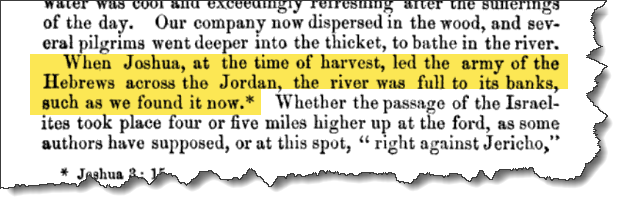
- The Jordan overflows: The Bible is clear in this manner. "...for the Jordan overfloweth all his banks all the time of the harvest." Joshua 3:15
From the above list, you should understand that in order for the new year to be confirmed, we should see all four indicators occurring at the same time. Simply put, whatever month these things happened on in 1844, that is the month of the new year. Now, let's let the eyewitnesses talk:
Evidence of the Barley Harvest in 1844
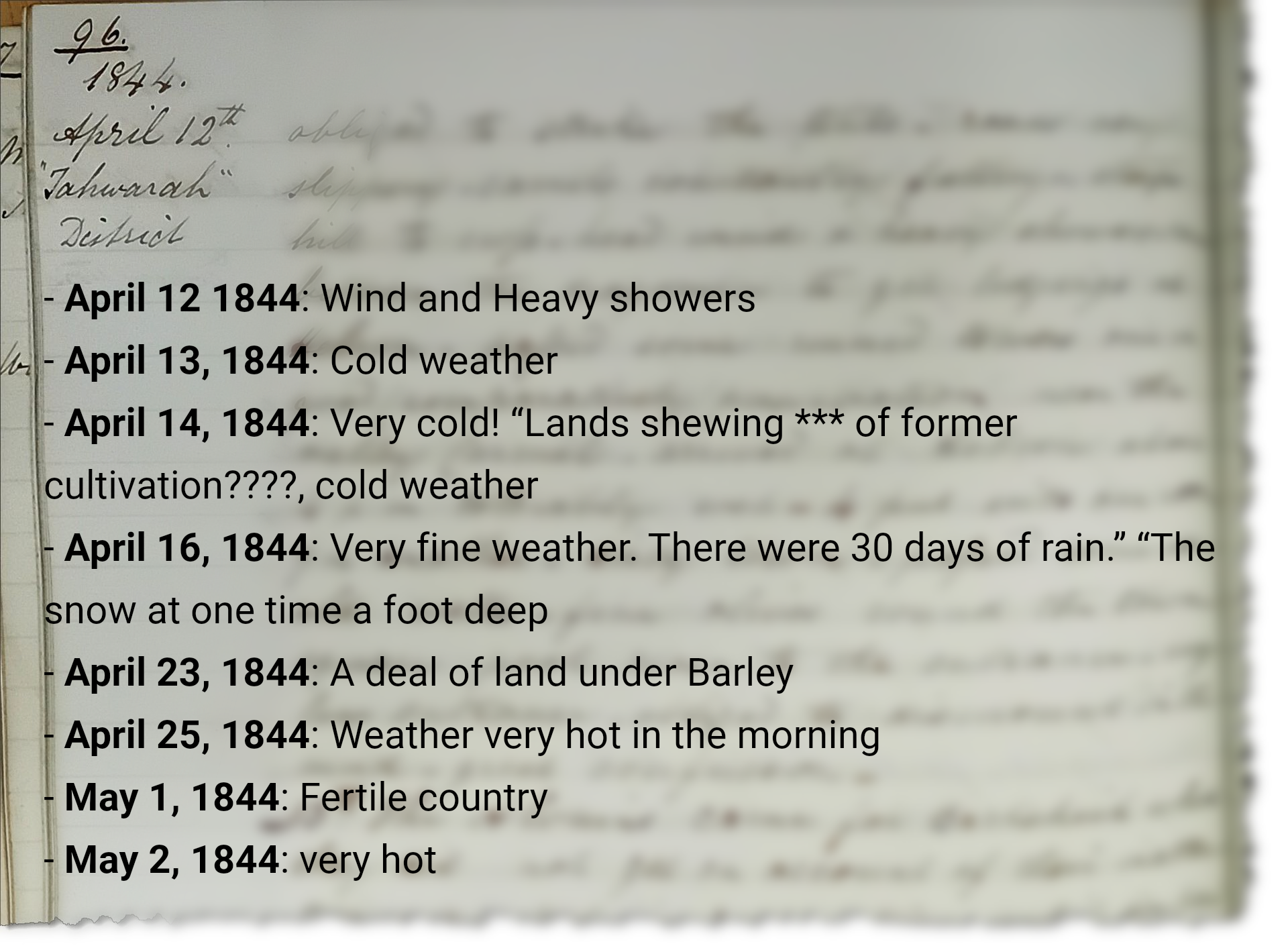
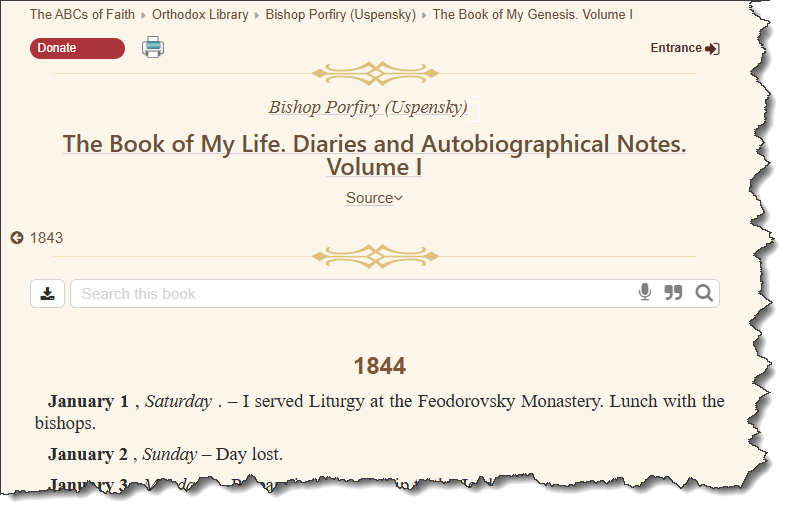
- Author: Bishop Porfiry (Uspensky)
- March 9, 1844 (March 21) - The day had been cloudy since the morning. But after lunch, around 12 o'clock, clouds rolled in from the west and poured down a heavy and abundant rain.
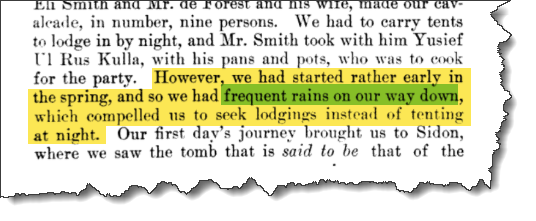
- March 29, 1844 (April 10) - It was very cold; a wind blew from the west, bringing with it a sharp chill...The weather here has long been cold and rainy.
- March 30, 1844 (April 11) - It is extremely cold; the wind rages and sometimes rumbles like thunder, so strong and resonant are its mountain gusts; there is intermittent rain with fine hail, or, more accurately, sleet; I cannot even show my face outside the door.
- March 30, 1844 (April 11) - The sun peeks out, then clouds roll in, then rain pours down, then hail pelts the ground.
- March 30, 1844 (April 11) - Rain, cold, hail, a stormy wind. Lord have mercy!
- April 1, 1844 (April 13) - The rain and wind have died down. But it's cold.
- April 2, 1844 (April 14) - A clear but cold day.
- April 3, 1844 (April 15) - Today it has become warmer, but not hot.
- April 4, 1844 (April 16) - It's warm today. The evening is cool.
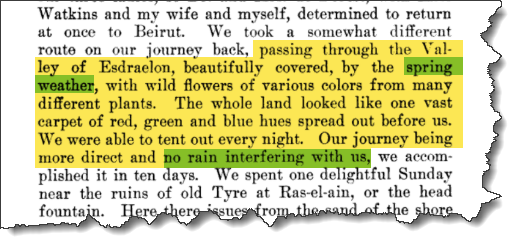
- April 17, 1844 (April 29) - Since the 15th of April, the weather has been very warm and calm.
- April 21, 1844 (May 3) - The hot season had arrived.
- April 24, 1844 (May 6) - It is very hot and quiet outside.
- Author: A.L.K. (Augustus L. Klink??)
...the latter rain, usually in March, occurs most persistently, and is generally associated with cold, damp, stormy, and continues until the time at which we complete the cycle of the year." Ernst Gustav Schultz,
Jerusalem: A Lecture
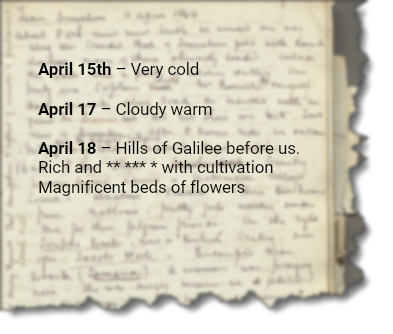
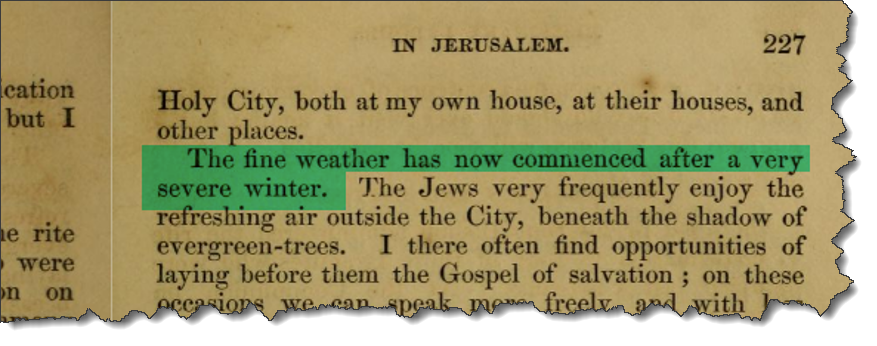
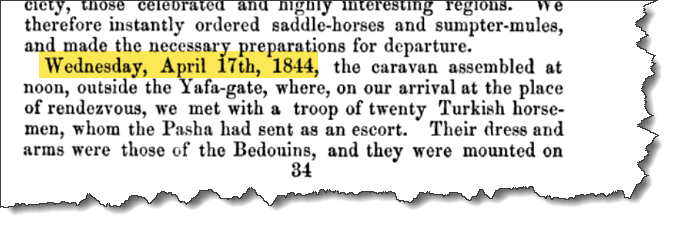
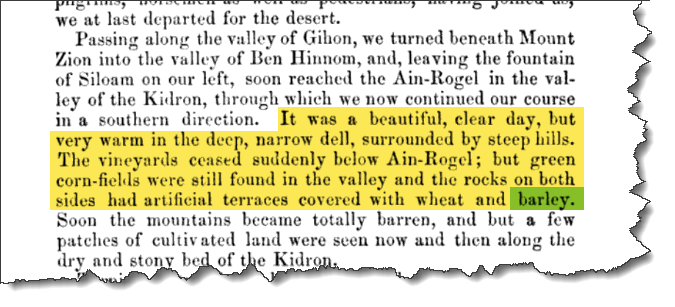
According to what we have read, we can clearly see that the cold, damp, and stormy period did not end until the third week in April. Thus, according to Schultz's criteria, the "cycle of the year" didn't end until the third week of April 1844.
Conclusion
It is no longer debatable. The barley harvest occurred in April of 1844. Regardless of the allegations set forth by Evangelicals and Catholics. Against what online Hebrew calendars have listed. In spite of what Rabbinicals and Karaites have proclaimed. The Adventist Church was always correct.
God is exactly who I thought He was! There was no way that He was not going to send a witness to Jerusalem for us. And now, I think it is pertinent that I end this article by confirming to all who will read these pages. In 1844, the antitypical Day of Atonement fell on October 22 of that year, and this computation "stands without impeachment."
Relevant Studies
HOW TO DETERMINE THE START OF THE 2,300 DAYS
Breathtaking colors of our planet
Button
EZRA'S CHRONOLOGY ISSUE HAS BEEN SOLVED
Portraits of people from around the globe
Button
COMMAND TO BUILD JERUSALEM FOUND IN EZRA 7
Button
WHICH CALENDAR IS PROPHECY RECKONED BY?
Button
Which year did Artaxerxes decree go forth? 458 or 457 BC?
Button
THE DAY FOR A YEAR PRINCIPLE IN DANIEL 8:14
Button
THE BARLEY HARVEST REPORT FOR 1844 CONFIRMS OCTOBER 22
Button