
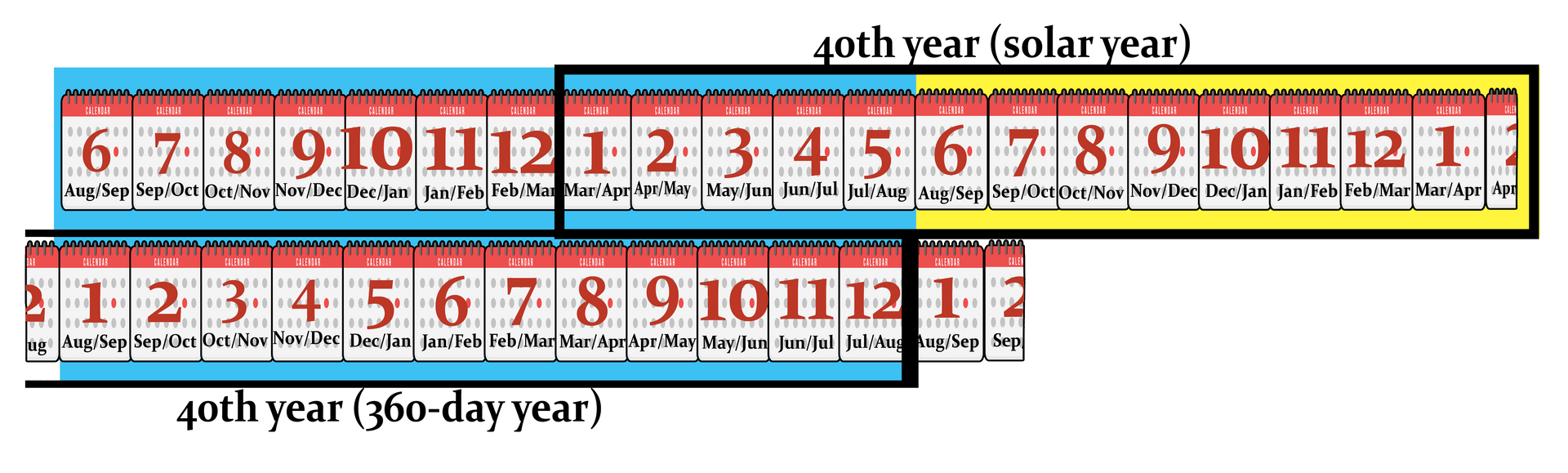
For centuries, students of prophecy have wrestled with a crucial question: How does the Bible calculate prophetic time? Some argue for the standard solar year of 365 days, while others strongly insist that prophecy must be calculated using a 360-day year—a so-called “a prophetic year.”
This disagreement affects major prophetic timelines, including the 70 weeks of Daniel 9, the 1260 years, and the 2300 evenings and mornings. Choosing one method over the other can shift prophetic timeframes by decades. This is important because many proponents of Nehemiah's 444 BC decree believe it utilizes the 360-day reckoning which brings its fullfillment to the year 32 AD—the date they give to Jesus' triumphant entry into Jerusalem as the Messiah.
Today we’re going to settle this question from Scripture—not from human logic—and determine exactly when the Bible uses a 360-day year, when it does not, and why this distinction matters. Let’s study!


This is paragraph text. Click it or hit the Manage Text button to change the font, color, size, format, and more. To set up site-wide paragraph and title styles, go to Site Theme.